









By the Roomhints Editorial Team
Part of the Roomhints Designer Spotlight Series
Main Facts: The Philosophy of Precision
In the upper echelons of contemporary residential interior design, few practitioners evoke the concepts of rigor, discipline, and understated elegance quite like Martin Kobus. As the principal of Kobus Interiors, the Dutch-born designer has built a career upon three foundational pillars: clean lines, subtle gestures, and uncompromising luxury. For Kobus, these are not mere stylistic aspirations to be checked off a mood board; they represent a strict professional discipline—a way of seeing and interpreting space that he has spent a lifetime refining.
Operating with a distinct European sensibility, Kobus brings a clinical precision and cultural depth to every project his firm undertakes. His design philosophy is built on an intentional creative tension: give the client what they explicitly desire, but rigorously drive the project in the direction it structurally and aesthetically needs to go. This subtle yet vital distinction separates the interior designers who merely execute functional floor plans from those who provide genuine creative leadership.
The hallmarks of a Martin Kobus interior are immediately recognizable yet difficult to categorize. They resist fleeting trends in favor of timeless materials, balanced proportions, and an aura of effortless habitation. His work is a masterclass in the art of editing—knowing precisely what to leave out of a room is often treated with the same gravity as deciding what to put in.
Chronology: A Lifetime Formed by Design
To understand the confidence with which Martin Kobus commands a room, one must trace the trajectory of a life completely immersed in the built environment. Growing up in the Netherlands, Kobus was exposed early to the rich traditions of European architecture, art, and furniture design. This lifelong immersion meant that the creation of inspired interiors was not a career choice stumbled upon later in life, but a natural evolution of his worldview.

- Early Foundations (The European Years): Immersed in a culture that values functionalism, historical preservation, and master craftsmanship, Kobus developed an early appreciation for spatial geometry and material honesty.
- The Transatlantic Transition: Relocating to the United States, Kobus brought with him a European eye for detail—a perspective that immediately resonated with high-end residential clients looking for sophistication without superficial flash.
- Establishment of Kobus Interiors: Founding his eponymous firm marked the formalization of his design philosophy. It was during this period that he honed the delicate negotiation between client appeasement and artistic direction.
- The Rancho Mirage Masterpiece: A defining milestone in the firm’s timeline, the completion of a sprawling, high-stakes estate in Rancho Mirage, California, served as the ultimate proving ground. Handling the harsh, unforgiving desert light and dramatic landscape, Kobus delivered an estate that cemented his reputation for architectural harmony.
- Present Day: Operating nationally from the United States, Kobus continues to shape luxury residential spaces while influencing the broader dialogue on modern interior architecture through features, mentorship, and his portfolio at martinkobushome.com.
Supporting Data & Design Influences: Where Inspiration Meets Material
Great design does not happen in a vacuum, and Kobus is remarkably transparent about the intellectual and visual touchstones that inform his work. When asked about his sources of inspiration, he points toward three primary pillars: luxury hospitality venues, the legacy of master designer Christian Liaigre, and global travel.
The Influence of Christian Liaigre
Liaigre—whose restrained, material-focused interiors defined a generation of high-end residential and commercial design—serves as a clear philosophical touchstone for Kobus. Like Liaigre, Kobus understands that true luxury is tactile and quiet. It relies on the natural beauty of wood, stone, leather, and linen rather than loud decorative statements or ornate architectural embellishments.
The Hospitality Paradigm
Luxury resorts represent what Kobus considers the highest-stakes version of the interior architecture problem. Designing a private home is an intimate challenge, but a luxury resort must solve a collective dilemma: how do you create spaces that feel immediately inhabitable, deeply personal, and entirely un-generic to thousands of transient guests? By studying the spatial flow, lighting strategies, and emotional resonance of world-class resorts, Kobus extracts principles that translate directly into high-end residential commissions.
Global Travel as a Vocabulary Expander
For Kobus, travel is not a vacation from design; it is research. Experiencing different cultures, vernacular architectures, and regional craft traditions continually expands his creative vocabulary, preventing his work from becoming insular or repetitive.
Official Responses & Direct Perspectives: The Art of Listening and Leading
To gain a deeper appreciation of how Kobus operates on a day-to-day basis, one must examine his own reflections on the realities of the design process. In his own words, interior design is as much an exercise in human psychology as it is an exercise in spatial arrangement.

"We are a design firm that believes in giving the client what they want but to drive the project in our direction. Clean, subtle, luxurious interiors are our hallmark."
The Psychology of Space
According to Kobus, more than half of a successful interior designer’s job is psychological, not aesthetic. Understanding a client—how they actually live, what their hidden anxieties might be, and what they truly want but cannot articulate—requires profound empathy and active listening.
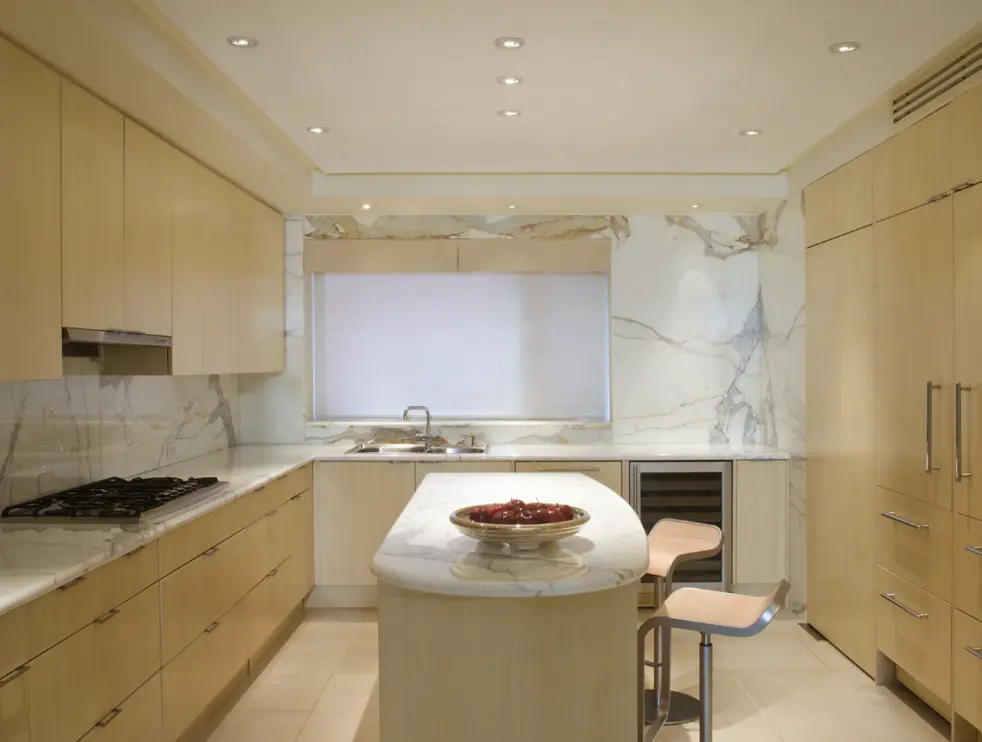
Clients often arrive at an initial consultation with a collage of digital imagery, Pinterest boards, and preconceived notions. The designer’s job is not to dismiss these ideas, but to decode them. The real skill of a master designer lies not just in the final product—the gleaming kitchen, the serene bedroom, the perfectly proportioned living room—but in the conversational journey that bridges the gap between the client’s imagination and spatial reality. Kobus listens carefully to uncover the emotional core of a project, then leads the execution with unwavering conviction.
The Ultimate Finishing Touch: Fragrance
When asked what finishing touch most radically transforms a space, Kobus offers an answer that surprises many industry observers. Eschewing the conventional answers of art curation, dramatic lighting placement, or final layers of decorative accessories, he points to fragrance.
This perspective underscores his holistic understanding of spatial design. For Kobus, a room is not merely a visual composition meant to be photographed for a magazine; it is a multi-sensory environment. Engaging the olfactory sense completes the architectural experience, ensuring that entering a properly designed space evokes an immediate, visceral sense of arrival and comfort.

Implications: Flexibility as the Ultimate Design Principle
In an industry prone to dogmatic adherence to specific styles—whether minimalism, maximalism, mid-century modern, or industrial chic—Martin Kobus offers a refreshing antidote: flexibility.
When pressed for his single most important design principle, Kobus reduces his entire professional ethos down to that single word. The ability to respond dynamically—to a difficult structural space, to a changing client brief, or to the unexpected realities that inevitably arise as a complex construction project unfolds—is what separates competent interiors from truly exceptional ones.
No design plan, no matter how meticulously rendered in CAD or watercolored by hand, survives contact with a real building entirely intact. Unforeseen plumbing chases, structural load-bearing limitations, shifting natural light patterns, and supply chain delays all conspire to disrupt the original vision. The designer who possesses the flexibility to adapt without sacrificing the core aesthetic integrity of the project is ultimately the one whose rooms are worth living in.
As the design landscape continues to evolve in an increasingly digital and fast-paced world, figures like Martin Kobus remind us that the heart of interior architecture remains deeply human. It is a delicate dance between structure and emotion, listening and leading, precision and adaptability—resulting in spaces that are not only beautiful to look at, but profound to inhabit.