








By Eric Levine, Ed.D., with Becky Shipkosky
What do a silent-era Hollywood superstar accused of a heinous murder he did not commit, and a pioneering Venetian boatman falsely celebrated as the world’s first female gondolier, have in common?
Crucially, neither man’s defining public narrative was true. Roscoe "Fatty" Arbuckle never murdered actress Virginia Rappe, and Alex Hai is not a woman. Yet, in both cases, false public narratives became so pervasive, viral, and aggressively defended by the media and public alike that they entirely eclipsed the truth. For decades, these men were robbed of the fundamental human right to author their own identities.
The power of narrative agency—the ability to define one’s own existence, triumphs, and trials—goes far beyond simply feeling understood. Psychologically, it anchors the human experience. Conversely, the harms of losing that agency are profound, destabilizing, and, as historical and medical data demonstrate, quite literally deadly. While the trajectories of Arbuckle and Hai diverge in their final chapters, examining their parallel struggles offers urgent, real-world wisdom regarding the psychological architecture of truth, media distortion, and the healing power of self-expression.
Main Facts: The Anatomy of Narrative Theft
At the core of both Arbuckle and Hai’s trials is a phenomenon known as narrative theft: the systematic hijacking of an individual’s life story by outside forces—media moguls, institutional biases, public moral panics, or societal limitations.
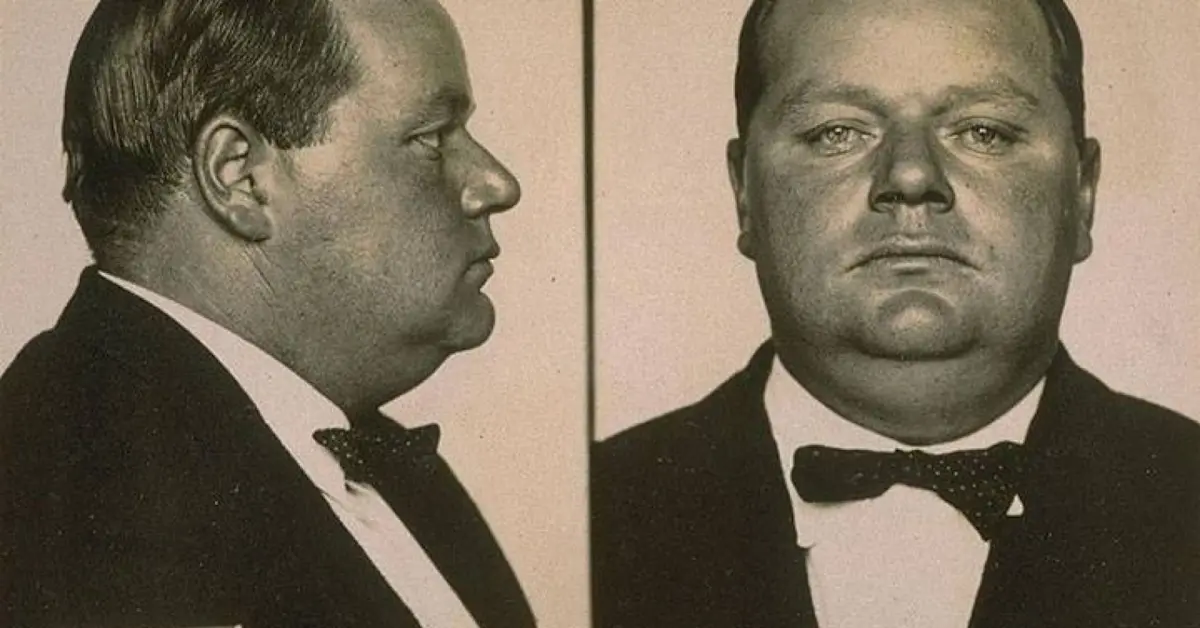
In the 1920s, the burgeoning Hollywood studio system was facing intense moral scrutiny. Sensing an opportunity to manufacture outrage and drive newspaper sales, media titan William Randolph Hearst weaponized public mistrust of Hollywood’s perceived decadence. He targeted Roscoe Arbuckle, one of the silent era’s biggest and most beloved comedic stars, framing him as a violent predator. Sensationalist headlines and fabricated editorial columns invented a grotesque narrative that directly led to Arbuckle’s professional ruin and social ostracization, despite his complete legal exoneration in a court of law.
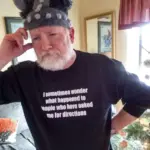
Decades later, in Venice during the mid-1990s, Alex Hai found himself trapped in a similarly rigid, externally imposed narrative. Assigned female at birth, Hai knew from a very young age that he was a man. Yet, upon establishing himself as a master boatman in a historically male-dominated Venetian guild, the local and international press seized upon a neat, marketable trope: the "first female gondolier."
Hai repeatedly refused to speak with journalists, rejecting a feminist icon status that fundamentally erased his gender identity. Nevertheless, the media persisted. The resulting fallout was catastrophic: the guild turned its back on him, assuming he orchestrated the publicity, and local authorities subjected him to professional discrimination and legal harassment.
In both instances, the public narrative was prioritized over human reality, proving that society often prefers a convenient myth to a complex truth.
Chronology: Two Lives Upended by Public Fiction
Roscoe "Fatty" Arbuckle: Rise, Fall, and Tragic Curtailment
- The Early Years (1887–1900s): Roscoe Arbuckle’s narrative agency was undermined from birth. His small-framed father rejected him, refusing to believe a 13-pound baby was his, accusing his mother of infidelity, and naming him after a notoriously corrupt politician. Forced to fend for himself starting at age 11, Arbuckle built a legendary career in vaudeville and silent film through sheer talent and resilience.
- The Peak (1921): By age 32, Arbuckle was the highest-salaried actor in the world, having signed a historic million-dollar contract with Paramount.
- The Scandal and Trial (September 1921): Following a party in San Francisco where actress Virginia Rappe fell fatally ill from a ruptured bladder, Hearst publications published dishonest headlines implying Arbuckle had crushed her. He was thrust into a media circus and put on trial for manslaughter.
- Exoneration and Blacklist (1921–1933): Though three successive juries completely acquitted Arbuckle, issuing a rare formal apology denouncing the persecution, the damage was done. Hollywood blacklisted him for over a decade.
- A Tragic End (June 28, 1933): After years of struggle, Warner Bros. finally offered Arbuckle a contract for a feature-length comedy. Celebrating the news with friends, he remarked, "This is the happiest day of my life." He died of a heart attack in his sleep that night at the age of 46.
Alex Hai: Rejection, Misrepresentation, and Exile
- Early Childhood and Departure (1970s–1980s): Assigned female at birth, Alex knew by age three that he was a boy—a reality his parents rejected. He left home at 15, navigating Hamburg’s red-light district before finding stability, education, and eventually studying film at university.
- Venice and the "Gondoliera" Myth (1990s): While working on a film project in Venice, Alex fell in love with rowing and boat repair. Despite presenting as male-leaning and refusing media interviews, the press christened him the "first female gondolier."
- Institutional Backlash and Legal Battles (Late 1990s–2010s): The gondolier guild ostracized Hai, and licensing judges repeatedly failed him out of unmasked prejudice. Years of exhausting legal battles ensued. Even as he briefly attempted to monetize the "prima gondoliera" label to survive, the psychological toll mounted.
- Confiscation and Return to Germany: Following the unexplained, arbitrary confiscation of his boat by authorities—and facing growing threats of transphobic violence—Alex suffered severe depression and was forced to flee Italy, returning to his native Germany.
Supporting Data: A Broader Societal Pattern
The stories of Arbuckle and Hai are far from isolated anomalies. History is populated by individuals whose lives were violently rewritten by public hysteria, institutional bias, and sensationalism:
- Richard Jewell (1996): Discovered a pipe bomb at the Atlanta Centennial Olympic Games, saving hundreds of lives. The FBI and media aggressively cast him as a "lone-wolf" domestic terrorist. Though thoroughly exonerated and vindicated in subsequent defamation suits, the chronic stress contributed to his early death from heart disease at age 44 in 2007.
- Lindy Chamberlain (1982): Wrongfully convicted of murdering her 9-week-old baby in the Australian Outback after a dingo snatched the child from a tent. The public misread her composed grief as psychopathy. After serving time, enduring intense vilification, and eventual exoneration, she became an advocate for legal reform and public understanding.
- The Central Park Five (1989): Five Black and Latino teenagers coerced into false confessions and imprisoned for years for a brutal crime they did not commit. They have since reclaimed their narratives through memoirs, political advocacy, and legal victories.
- Monica Lewinsky (1998): Her consensual relationship with President Bill Clinton was thrust onto the global stage during impeachment proceedings, subjecting her to relentless cyberbullying, late-night punchlines, and systemic isolation. She transformed her stolen narrative into a powerful platform as an anti-bullying activist and public speaker.
Psychological research consistently corroborates the heavy toll of narrative disruption. Studies led by narrative psychologist Dr. Jonathan Adler demonstrate that reclaiming an abused or misused personal narrative acts as a powerful catalyst for psychological healing, bolstering resilience and self-efficacy (Adler, 2011; Adler et al., 2015).
Conversely, having one’s narrative stolen, silenced, or invalidated inflicts a deep existential wound. It fractures the integrated self, strips away personal agency, and triggers chronic self-doubt, clinical depression, anxiety, and complex trauma. Furthermore, cardiovascular research underscores that the chronic stress, anxiety, and trauma resulting from narrative violation have direct, measurable impacts on cardiovascular health, elevating the risk of heart disease and premature mortality (Cohen et al., 2015; Hendrickson et al., 2013).
Official Responses and Institutional Accountability
The institutions responsible for authoring and amplifying these false narratives—ranging from the sensationalist press of the early 20th century to modern legal and judicial bodies—have historically been slow to offer accountability.
In Roscoe Arbuckle’s case, the jury foreman issued an unprecedented public statement following his 1921 acquittal:
"Acquittal is not enough for Roscoe Arbuckle. We feel that a great injustice has been done him… We wish him success and hope that the American public will take back into the sunshine of their hearts the besmirched actor who has been proven innocent."
Despite this official judicial stance, studio executives and Hearst publishers refused to issue retractions matching the scale of their original smears, prioritizing profit margins and moral posturing over human lives.
Similarly, in Alex Hai’s case, Venetian municipal institutions and traditional maritime guilds demonstrated systemic institutional rigidity. Bound by rigid cultural frameworks that lacked the language or willingness to understand transgender identities in the mid-1990s, officials weaponized bureaucratic procedures against him. The refusal of licensing boards to evaluate Hai on his athletic and technical merits—choosing instead to penalize him for media narratives he actively rejected—reveals a profound institutional failure to protect marginalized individuals from sensationalized persecution.
Implications: Redemption Through Expression and the Path Forward
Where the parallel road of Arbuckle and Hai diverges offers a vital lesson in human resilience. While Arbuckle’s life was cut short just as he was poised to reclaim his career, Alex Hai found a pathway to redemption through creative expression.
Relocating to Berlin, Hai found a supportive, inclusive community. He began to write a roman à clef—fiction designed "to protect the guilty"—and transitioned to producing a steady stream of poetry and visual art. By undergoing gender-affirming medical care and processing years of emotional trauma through creative outlets, Hai successfully reclaimed the pen. He proved that while external forces can steal a narrative, the human spirit retains the capacity to author a new, authentic ending.
Key Takeaways for Society:
- Media Ethics and Accountability: Outlets must recognize that sensationalized storytelling carries lethal psychological consequences. Retractions and corrections must match the visibility of original accusations.
- Embracing Complexity Over Tropes: Society must move past reductive frameworks (such as reducing a transgender man to a "first female" milestone) that prioritize neat headlines over human truth.
- The Healing Power of Story Ownership: Cultivating environments that allow individuals to speak for themselves—and validating their lived experiences—is not merely a matter of politeness; it is a vital public health imperative with life-or-death implications.
Ultimately, owning our stories is about much more than simply feeling understood. As the historical record shows, the freedom to define oneself is foundational to mental well-being, cardiovascular health, and the preservation of human dignity.