









ISTANBUL — In an era dominated by mass production, automated supply chains, and flat-packed convenience, a quiet counter-revolution is taking place in workshops across Türkiye. Here, objects are not rushed off assembly lines; they are coaxed into being. At the forefront of this artisanal revival is Regen Studio, a boutique design practice and furniture brand that treats furniture design not as an afterthought of interior decoration, but as an extension of architecture itself.
Founded on the principle that the objects we live with should possess both spatial integrity and emotional resonance, Regen Studio has carved out a distinct niche in the contemporary design landscape. Specializing in bespoke, made-to-order pieces handcrafted by skilled local artisans, the brand rejects industrial scale in favor of collectible design in its truest sense: made once, made well, and made to last.
Main Facts: The Anatomy of Regen Studio
At its core, Regen Studio operates at the intersection of architectural rigor and traditional craftsmanship. Based in Türkiye, the studio functions both as an independent furniture house and an extension of architectural problem-solving.
- Design Philosophy: Bridging mid-century modern sensibilities with forgotten artisanal techniques, focusing on proportion, material honesty, and spatial atmosphere.
- Production Model: Entirely made-to-order, zero mass-production, crafted exclusively by hand by local artisans in Türkiye.
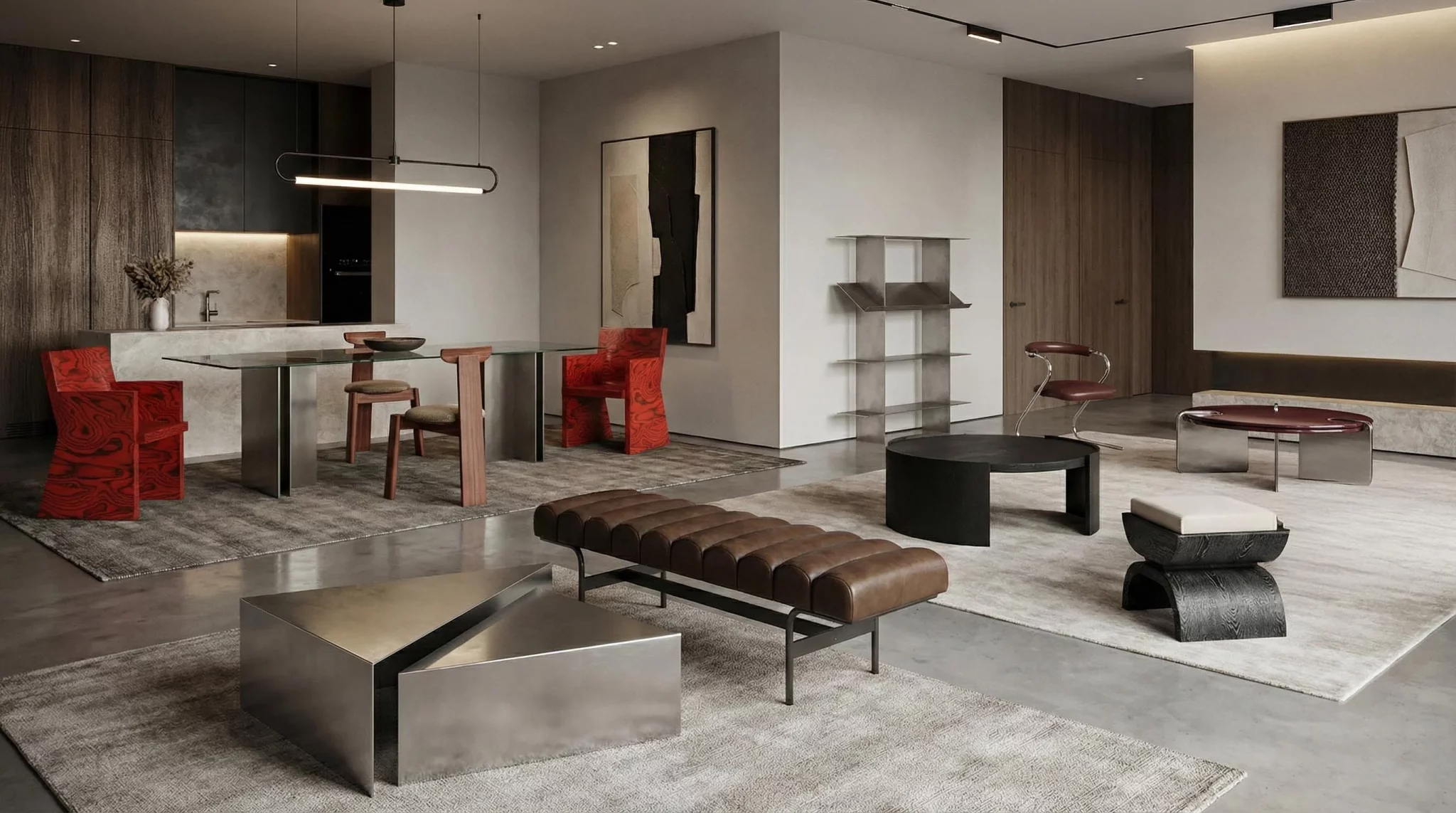
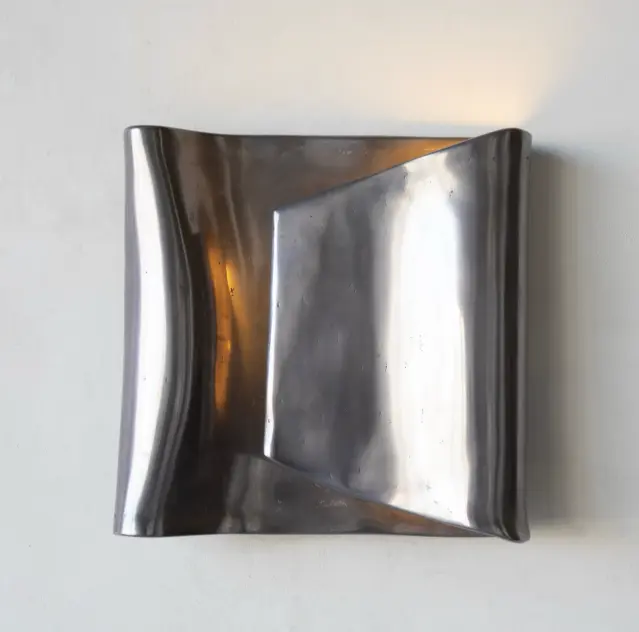
- Materiality: A sophisticated palette featuring root veneer, rich wood constructions, and tactile metal elements, finished with bespoke polish options.
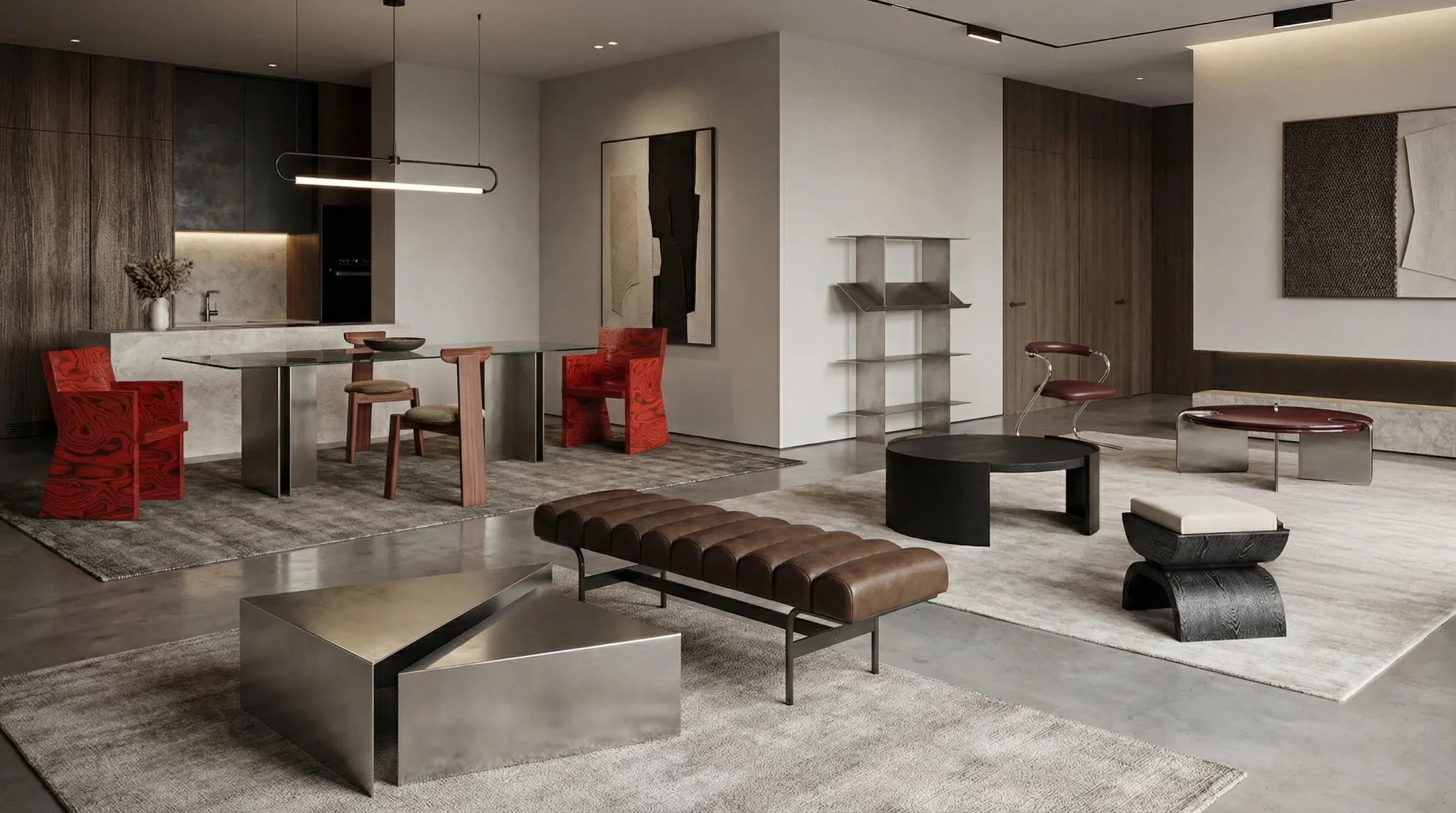
- Signature Piece: The Kira Chair—measuring 88 × 56 × 63 cm, constructed from root veneer with a bold red polish, embodying a sculptural yet restrained aesthetic.
- Fulfillment: Custom-built pieces with a standard delivery window of 2 to 4 weeks.
The studio’s work is designed to challenge the ephemeral nature of modern consumer culture, offering longevity and narrative depth through meticulous material exploration.
Chronology: From Spatial Constraints to Independent Identity
The genesis of Regen Studio was not marked by a corporate business plan, a flashy launch event, or a venture capital pitch deck. Instead, it emerged organically from the daily pressures of architectural practice.
Phase One: The Architectural Genesis (The Years of Practice)
Long before Regen Studio had a name, its founder—trained as an architect—was deep in the trenches of spatial design. For years, her architectural practice involved designing custom furniture and bespoke spatial elements to solve specific, highly localized problems within specific rooms.

If a client’s dining alcove required an unyielding focal point, or a transitional hallway demanded a seating element that felt both grounded and ethereal, the solution was designed from scratch. Over time, an unintended pattern began to emerge. Across vastly different architectural projects, a shared sensibility, a distinct visual logic, and a singular approach to proportion and atmosphere kept reappearing.
Phase Two: Recognizing the Continuity
Eventually, this continuity became impossible to ignore. The founder noticed that the bespoke pieces designed to solve isolated client problems shared a unified design language. They spoke the same structural and emotional dialect. The underlying philosophy—that an object should hold or release the atmosphere of a room in a specific way—demanded its own platform.
Phase Three: The Birth of Regen Studio
The decision to give that continuity a name birthed Regen Studio. By establishing it as an independent design practice, the founder liberated her furniture design from the immediate constraints of individual client briefs. Freed to follow its own language wherever it led, the studio transformed a localized architectural byproduct into a cohesive, standalone brand dedicated to collectible craftsmanship.
Supporting Data & The Maker’s Philosophy: Architecture in Miniature
To understand Regen Studio, one must first understand the architectural lens through which its founder views the world. In this practice, furniture is never treated as a separate entity from the built environment. A chair, a table, or a credenza is merely architecture scaled down to the human body.
Bridging Eras: Mid-Century Modernism Meets Forgotten Techniques
The studio draws heavy inspiration from the mid-century modern movement—particularly its masterful balance of organic form, functional clarity, and timeless material use. However, Regen refuses to indulge in mere replication.
Instead, the studio embarks on a process of architectural archaeology. They investigate techniques and materials that were once widely utilized by master builders and craftsmen, only to be sidelined by the industrial revolution of furniture manufacturing. By taking these forgotten methods and running them through a contemporary design filter, Regen creates a dynamic dialogue between past and present. The resulting objects feel simultaneously ancient and avant-garde.

The Iterative Process and the Value of Constraint
Every piece begins with context. Before a single line is drawn or a material is selected, the studio asks foundational questions: How will this object live within a space? What kind of emotional atmosphere is it required to support?
The creative process is intensely iterative:
- Contextual Mapping: Analyzing spatial relationships, human scale, and functional demands.
- Form & Material Exploration: Testing textures, wood grains, metal finishes, and color combinations to strike a balance between visual presence and subtle integration.
- Workshop Collaboration: Engaging directly with master craftspeople from the earliest conceptual stages. Craftsmanship is never treated as a final, superficial finishing step; it actively dictates the structural and expressive character of the object from day one.
Intriguingly, the studio embraces constraints not as creative handcuffs, but as vital catalysts. Many of Regen’s most iconic pieces were born under the strict real-world pressures of architectural deadlines, spatial limitations, and material scarcities. Rather than diluting the design, these limitations forced a higher level of precision, proving that restriction is often the mother of true elegance.
Spotlight on the Object: The Kira Chair
If Regen Studio’s philosophy requires a physical manifesto, it can be found entirely within the lines of the Kira Chair.
Standing at dimensions of 88 × 56 × 63 cm, the Kira Chair is constructed from rich root veneer and finished with a striking, bold red polish. Visually, it is unapologetic. It draws the eye not through loud gimmicks or ostentatious ornamentation, but through pure sculptural confidence.
Architecture at Human Scale
The Kira Chair possesses the undeniable proportions of an object conceived at an architectural scale. It was clearly designed for a specific room rather than an industrial catalog. It is a piece that quietly yet forcefully shapes the acoustic and visual atmosphere of its surrounding environment.

Personalization and Restraint
Handcrafted and built strictly to order by Turkish artisans, the Kira Chair can be customized with various polish colors to suit diverse interiors. Yet, despite its bold red hue, the overriding sensation of the chair is one of profound restraint. It does not shout for attention; it simply refuses to be ignored. As the studio aptly notes, a piece of furniture this considered ultimately becomes a mirror of the person who lives with it—a reflection of their taste, their appreciation for patience, and their desire for authenticity.
Implications: The Future of Collectible Design and Slow Craft
The rise of Regen Studio highlights a broader, much-needed shift within the global design and architecture communities. As consumers grow increasingly fatigued by disposable culture and fast-furniture supply chains, brands that champion localized handcraft and architectural integrity are finding a deeply receptive audience.
1. The Revival of Regional Craftsmanship
By anchoring its production entirely within local workshops in Türkiye, Regen Studio helps preserve endangered artisanal trades. In doing so, it proves that regional craft can compete on an international stage without compromising its roots or outsourcing its soul to mass-manufacturing hubs.
2. The Blur Between Architecture and Object
Regen’s success signals a growing market appetite for collectible design that carries narrative weight. When an object is born from architectural thinking, it ceases to be a mere commodity. It becomes a spatial anchor, capable of altering how a human being experiences a room.
3. Sustainability Through Longevity
In sustainability circles, the conversation often centers on recycled plastics and carbon offsets. Regen Studio offers a more fundamental definition of sustainability: durability. By making pieces once, making them well, and making them to last lifetimes, the studio bypasses the replacement cycle entirely. An object you never have to replace is, by definition, the most sustainable object of all.
As Regen Studio continues to expand its catalog and refine its architectural vocabulary, it offers a compelling blueprint for the future of design—one where patience, context, and the human hand remain the ultimate luxuries.