









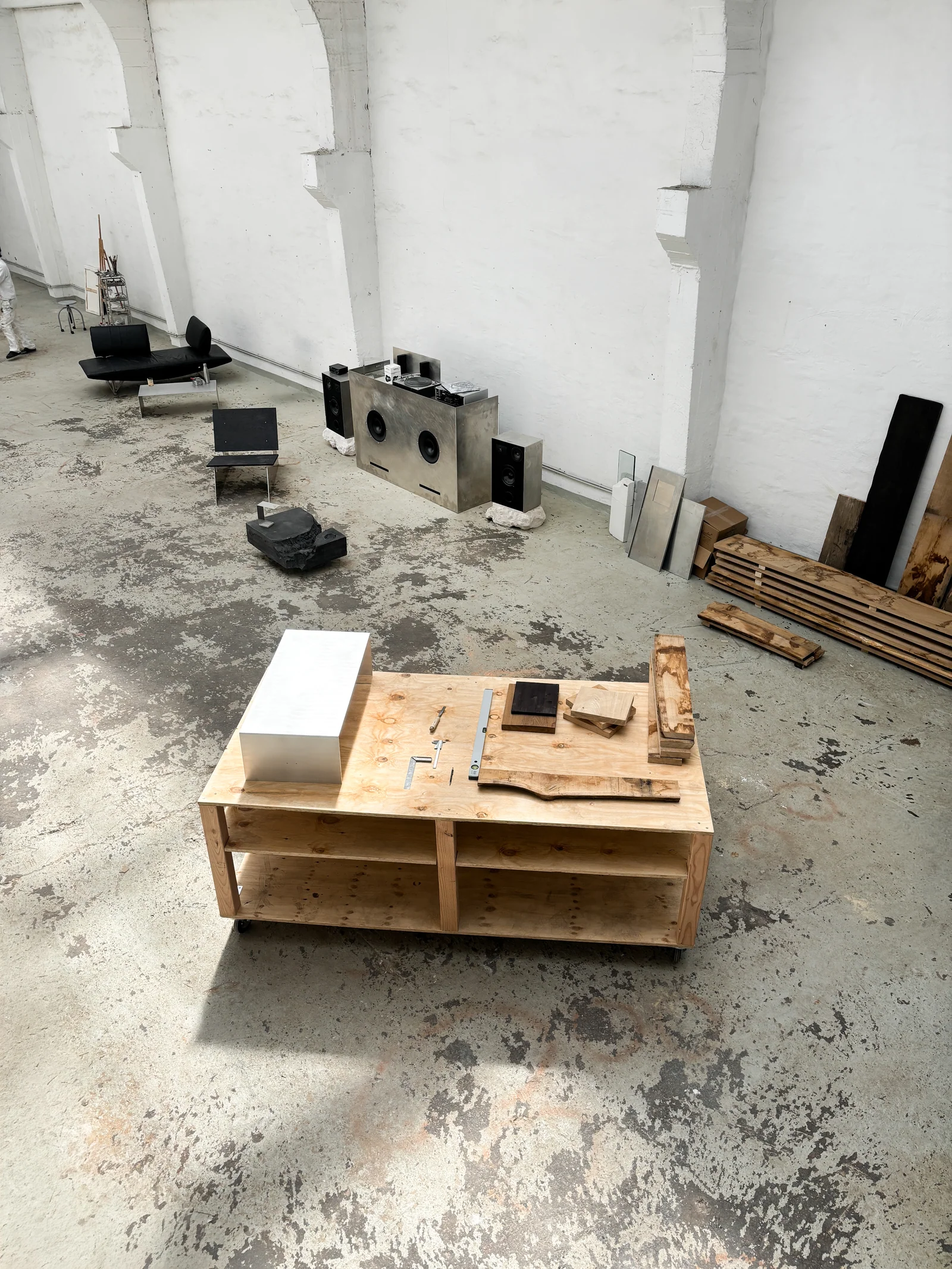
Introduction: The Discipline of Matter
At the very heart of Case Studios lies a fundamental philosophy: design is not merely about imposing a stylistic whim onto an arbitrary medium, but rather an exercise in deep discipline. Based in Düsseldorf, Germany, this interdisciplinary design house was founded by a collective of creators boasting diverse backgrounds in both fine visual arts and traditional craftsmanship. Operating fluidly across product design, interior architecture, and large-scale artistic installations, the studio resists the transient pull of fleeting trends. Instead, they adhere to an uncompromising ethos: every raw material possesses its own intrinsic logic, and the designer’s primary duty is to understand that logic, honor its boundaries, and ultimately get out of the way.
Rather than sketching a preconceived shape and subsequently hunting for a material to force into that mold, Case Studios flips the traditional creative process entirely on its head. The material always comes first. Its chemical properties, structural capabilities, historical legacy, and natural limitations dictate the trajectory of the project. The final form does not spring from a whim; it emerges organically from an intimate, ongoing conversation between the maker and the matter.
Chronology and Evolution: From Concept to Düsseldorf Workshop
The journey of Case Studios began with a shared frustration among its founding members regarding the superficiality of modern mass-produced furniture. In an era dominated by flat-pack convenience and synthetic veneer masquerading as authenticity, the Düsseldorf collective sought to revive a tactile connection to the built environment.

- Phase One – Conceptualization (The Formative Years): The founders—crossing disciplines from industrial design to sculptural woodcraft—began experimenting with raw, unvarnished elements. They tested the structural limits of concrete, the tactile memory of aged metals, and the preservative qualities of ancient wood-treatment techniques.
- Phase Two – Material Exploration: The studio established its permanent base in Düsseldorf, transforming a modest workshop into a hybrid laboratory and atelier. Here, concrete, hand-polished aluminum, and charred wood were subjected to rigorous physical testing, not for aesthetic compliance, but to evaluate their raw performance metrics under stress and time.
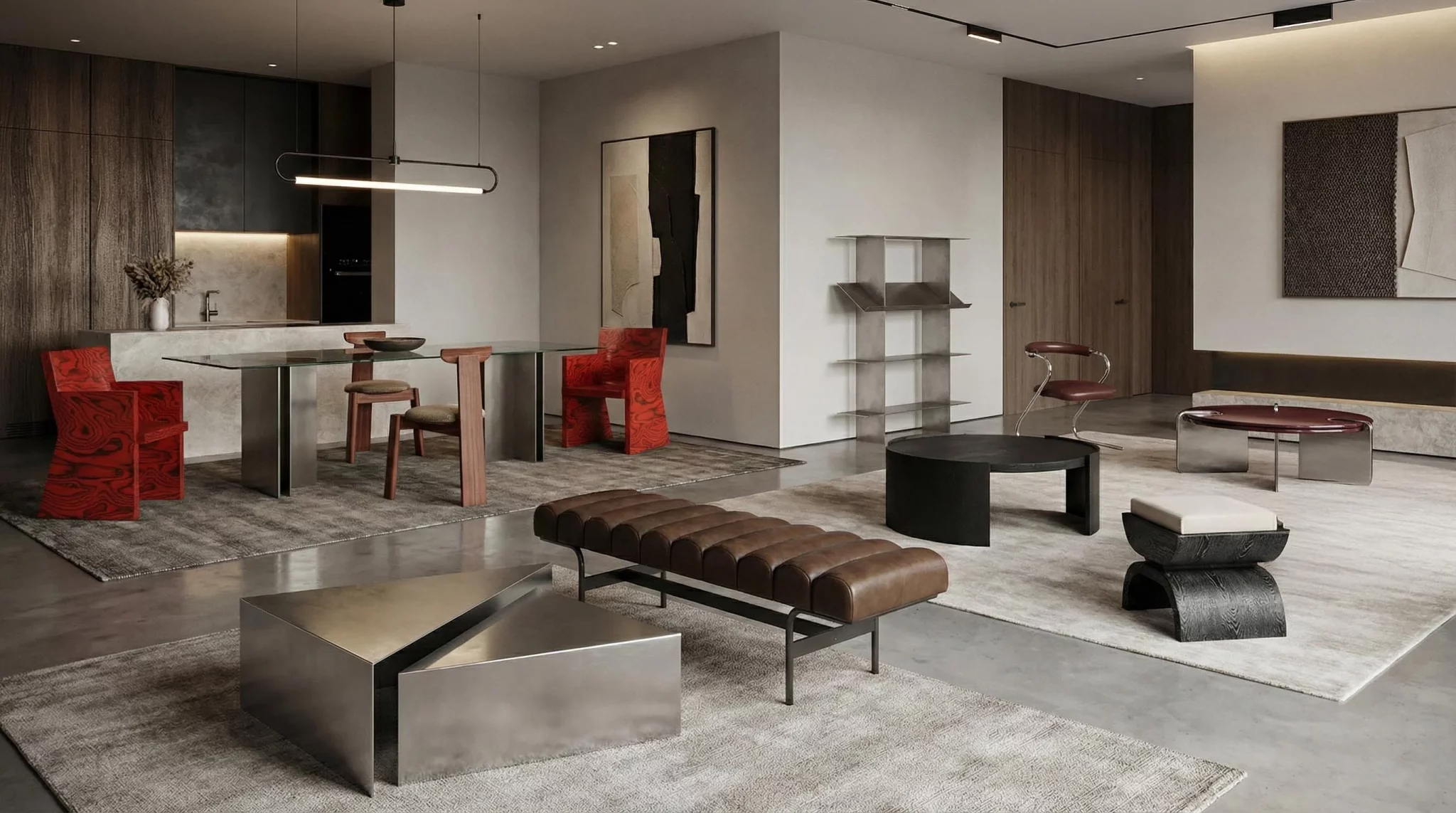
- Phase Three – Cross-Disciplinary Integration: Moving beyond isolated gallery pieces, Case Studios expanded its portfolio to include bespoke interior architecture and experimental product lines. The synthesis of ancient craft and modern industrial processing crystallized into their signature aesthetic: brutal honesty in construction and absolute structural clarity.
- Phase Four – The Exclusive Line Launch: Culminating years of material research, the studio introduced its limited-production furniture collections, punctuated by iconic pieces like the Yakisugi Burnt Wood Coffee Table, bridging international heritage techniques with contemporary German fabrication.
Supporting Data and Material Breakdown
Case Studios does not select materials based on superficial visual trends; every element is chosen exclusively for its functional performance, durability, and tactile feedback. The studio’s palette is rigorously edited:
| Material | Origin & Processing Technique | Structural Function | Aesthetic Contribution |
|---|---|---|---|
| Yakisugi Burnt Wood | Traditional Japanese charring (Shou Sugi Ban) adapted for European hardwoods. | Fire removes soft cellulose, leaving behind a dense, highly sealed, and moisture-resistant core. | Deep, light-absorbing black texture impossible to replicate via chemical stains or paints. |
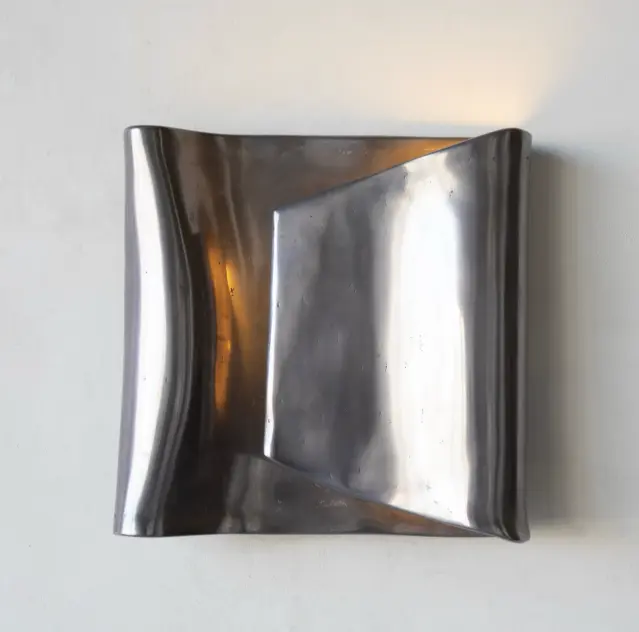
| Hand-Sanded Aluminum | Industrial-grade extrusion, manually finished with progressive abrasive grading. | Provides high tensile strength and acts as a cold, precise structural anchor. | Offers a satin, light-diffusing sheen that contrasts sharply against organic char. |
| Architectural Concrete | Custom-poured composite mixes cured under controlled ambient conditions. | Serves as heavy-duty load-bearing foundations and monolithic surfaces. | Displays raw aggregate patinas and a permanent sense of mass and permanence. |
The Anatomy of the Yakisugi Burnt Wood Coffee Table
As a primary manifestation of the studio’s design ideology, the Yakisugi Burnt Wood Coffee Table exemplifies their technical parameters:
- Dimensions: 115 cm (length) × 60 cm (width) × 30 cm (height).
- Proportions: Low, wide, and heavily grounded—deliberately engineered to anchor a living space rather than passively occupy it.
- Composition: Dual-material construction combining fire-sealed hardwood with hand-sanded, precision-milled aluminum joints.
- Uniqueness: Because the charring process reacts dynamically to the natural grain structure and moisture content of each individual timber plank, no two tables can ever be identical.
Official Perspectives and Studio Philosophy
To understand the operational mindset of Case Studios, one must examine their core operational tenets directly through the words of the makers themselves. The studio has frequently articulated its stance on modern manufacturing through various design forums and manifestos.

"The deliberate use, selection, and refinement of unique and durable materials create objects that both reshape and highlight the original properties of each material," notes the collective in their primary design statement.
Rather than treating materials as passive canvases, Case Studios approaches them as active participants in the creative dialogue. By merging the ancient Japanese philosophy of Yakisugi—which honors the resilience of timber through controlled fire—with the cold, clinical precision of hand-sanded aluminum, the studio rejects the artificial divide between ancient craftsmanship and contemporary industrial design.
Industry critics and architectural historians have noted that this approach acts as an antidote to modern consumerist fatigue. In official design symposiums, the founders have emphasized that true sustainability begins with material longevity. By selecting components that naturally resist decay, wear gracefully over decades, and require zero chemical post-treatments, Case Studios advocates for a circular economy built on physical endurance.

Implications for Modern Interior Architecture and Product Design
The rise of Case Studios signals a broader, much-needed shift within high-end interior architecture and product design. For decades, the dominant paradigm has favored digital-first modeling, where forms are conjured on computer screens and subsequently forced onto unwilling materials via injection molding or cheap laminates.
Case Studios proves that a material-first workflow yields profound implications for the future of the industry:
- Redefining Luxury Through Honesty: True luxury is no longer defined by ostentatious ornamentation, gold plating, or hidden joints. Instead, it is found in structural transparency—where every bolt, weld, and charred grain is visible, functional, and logically justified.
- The Revival of Slow Craft in Industrial Contexts: By integrating hand-finishing techniques like manual aluminum sanding with programmatic architectural layouts, the studio demonstrates that handcraft can scale without losing its soul.
- Environmental Resilience: Objects built with heavy-duty durability and minimal synthetic coatings drastically reduce the lifecycle footprint of interior furnishings. When furniture is designed to outlast its owners, the culture of disposable consumption begins to fracture.
Ultimately, Case Studios serves as a vital reminder that the physical world has rules of its own. By listening closely to what wood, metal, and stone are trying to do, designers can create spaces and objects that feel inevitable—as though they could not possibly have been made any other way, from any other thing.