









By Science & Health Desk
Published: October 24, 2023
Main Facts
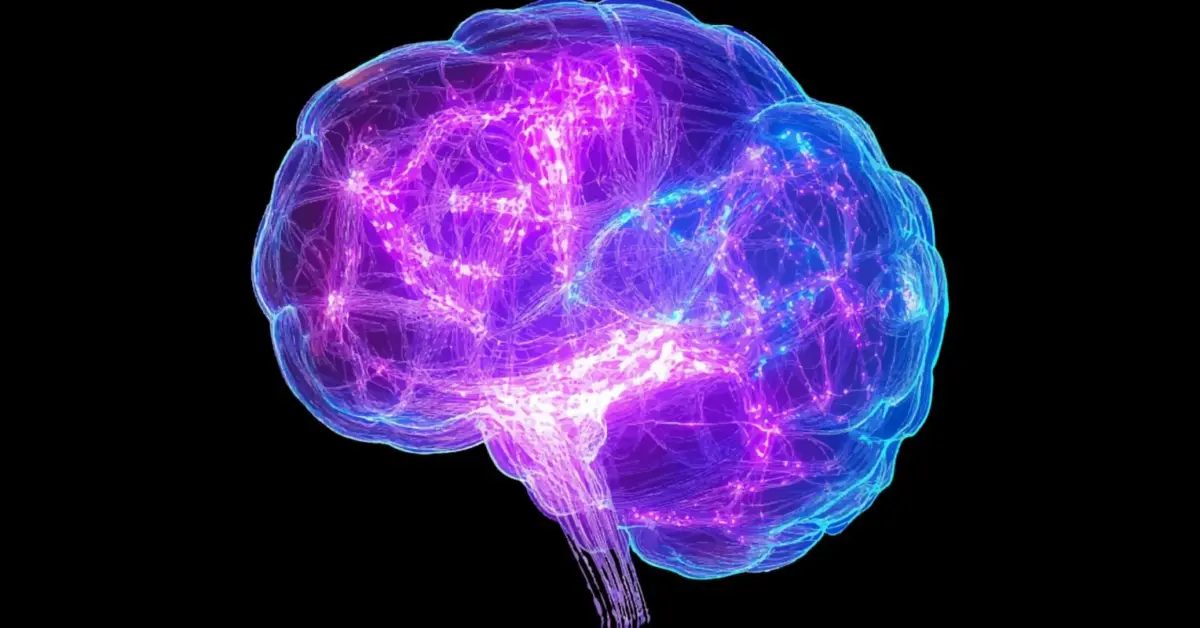
The human mind is a dynamic, ever-evolving landscape constructed from two primary components: knowledge—perceptions of the present moment anchored by the five senses and autobiographical memory—and energy flow, manifested as electrical pulses firing across intricate neural pathways. Groundbreaking insights from neuroscience increasingly demonstrate that the brain is not a static organ, but a malleable network capable of lifelong adaptation. This process, known as neuroplasticity, is governed by attention, intention, and lived experience, adhering to the fundamental Hebbian maxim: "Neurons that fire together, wire together."
Recent empirical research from institutions like the California Institute of Technology (Caltech) reveals that while the brain can forge entirely novel neural pathways to acquire unfamiliar skills, this process requires significantly more time and cognitive effort than building upon pre-existing networks. Furthermore, educational strategies that integrate the arts—such as music, dance, and creative expression—demonstrate a profound capacity to enhance memory retention and cognitive integration. Coupled with findings on neurodiversity, particularly among twice-exceptional (2e) learners, modern neuroscience highlights the critical role that supportive emotional environments, patience, and community play in unlocking human potential.
Chronology of Discovery: From Oz to Modern Neuroscience
To understand how the brain adapts, researchers have historically traced the evolution of cognitive science alongside developmental psychology.
- The Mid-20th Century (The Hebbian Era): Canadian psychologist Donald Hebb revolutionized neuropsychology in 1949 by proposing his theory of associative learning. He posited that persistent concurrent activation of cells leads to increased synaptic efficacy—giving birth to the famous phrase, "Neurons that fire together, wire together."
- The Late 20th Century (Mapping Neuroplasticity): For decades, scientific dogma held that the adult brain was fixed after a critical period in childhood. However, advanced neuroimaging in the 1980s and 1990s shattered this belief, proving that the brain continuously reorganizes itself by forming new neural connections throughout life.
- Recent Years (Caltech Brain-Machine Interface Studies): Researchers in Richard Anderson’s laboratory at Caltech, led by scientists Sofia Sakellaridi and Vassilios Christopoulos, utilized advanced brain-machine interface paradigms to track learning mechanics and individual neuron firing. Their work confirmed that pre-existing neural architectures heavily restrict or facilitate the acquisition of new skills.
- Contemporary Educational Interventions (Baltimore Studies): Educational researchers, including Mariale Hardiman and her team in Baltimore, Maryland, began testing the long-term cognitive impacts of arts-integrated learning. Their fifth-grade classroom studies proved that embedding creative arts into academic subjects drastically improved long-term information retention.
Supporting Data and Scientific Insights
The physiological architecture of the brain varies widely from person to person, a concept known as neuroindividuality. This variance is particularly pronounced in neurodivergent and twice-exceptional (2e) individuals—those who possess exceptional intellectual gifts alongside learning differences. For these individuals, the brain’s "yellow brick road" often features unexpected detours, backcountry shortcuts, and high-speed cognitive interchanges.
The Caltech Study on Skill Acquisition
The mechanics of how these neural pathways form and adapt were recently illuminated by researchers at Caltech. By examining how individual neurons fire during the learning process, the research team discovered that the brain prefers efficiency.
- Pre-existing Frameworks: Learning a new skill that shares structural similarities with an established competency is significantly faster. For example, a trained violinist can adapt to playing the bass guitar much more rapidly than they could learn to play the drums, because the foundational neural patterns for string manipulation are already paved.
- Constructing New Roads: When an individual attempts to learn a skill entirely from scratch—lacking any pre-existing neural framework—the brain must dedicate extensive time, repetition, and focused attention to lay down the necessary axonal tracks.
The Role of Emotional Safety in Learning
Neuroscience confirms that a stressed brain is a closed brain. Research highlighted by Pamela Cantor and colleagues demonstrates that emotional connectivity is the single greatest catalyst for cognitive acquisition.
- The Stress Response: When children or adults experience chronic negative reinforcement or trauma, the amygdala triggers a fight, flight, or freeze response. During this state, higher-order executive functions—housed in the prefrontal cortex—effectively go "offline."
- The Optimal Learning State: Conversely, emotional equanimity and supportive, stable environments at home, in the classroom, and within the community allow the mind to remain open, receptive, and neuroplastic.
Arts Integration and Long-Term Retention
In a landmark study conducted by Mariale Hardiman and her research team, fifth-grade students in Baltimore were taught complex scientific concepts (such as environmental science and astronomy) through traditional methods versus arts-integrated instruction (incorporating singing, movement, and theatrical performance).
- The Results: Students who engaged with the material through the arts retained scientific information with significantly greater accuracy ten weeks later compared to their peers in control classrooms. This demonstrates that multi-sensory, creative engagement bridges emotional and cognitive domains, cementing neural pathways far more effectively than rote memorization.
Official Perspectives and Expert Responses
Educational psychologists, neuroscientists, and developmental specialists increasingly advocate for a paradigm shift in how society approaches learning, neurodiversity, and mental flexibility.
- Dr. Richard Anderson, Principal Investigator at Caltech: Emphasizing the limits and possibilities of neural adaptation, Anderson’s laboratory underscores that while learning is bounded by past experiences, targeted repetition and intentional practice can successfully expand the brain’s operational repertoire.
- Pamela Cantor, Developmental Psychologist: Cantor’s extensive research into the biological impacts of trauma and stress emphasizes that academic instruction cannot be separated from emotional well-being. "Children need to feel emotionally secure and engaged with material that is meaningful to them," Cantor notes, highlighting that positive relationships act as the scaffolding for healthy brain development.
- Mariale Hardiman, Professor of Education: Speaking on the integration of arts and sciences, Hardiman asserts that teaching methods must evolve to match the brain’s natural inclination for multi-sensory processing. "When we engage the whole child—mind, body, and creative expression—we create durable neural circuits that resist forgetting," she states.
Implications for Education, Parenting, and Mental Health
The convergence of neuroplasticity research, educational science, and psychology carries profound implications for how parents, educators, and communities design learning environments for the next generation.
1. Redefining Behavioral Challenges in Neurodivergent Youth
Many 2e children experience profound asynchrony in their development. A child might possess the spatial memory of an adult while lacking the neural infrastructure required to wait their turn in a structured classroom setting. When educators and parents misinterpret this disconnect as willful disobedience rather than a neurological lag, the resulting negative reinforcement can severely damage a child’s self-esteem. Recognizing neurodivergence as a unique "yellow brick road" encourages a shift from punitive discipline to patient, compassionate guidance.
2. Cultivating Mental Flexibility and Resilience
Just as physical exercise builds muscle, intentional mental flexibility builds neural strength. By exposing the brain to novel, diverse experiences—ranging from the arts to complex problem-solving—individuals of all ages can enhance their capacity for innovation. Mental adaptability acts as a cognitive shortcut, allowing individuals to navigate unexpected life challenges ("storms") with wisdom and grace.
3. Transforming Curricula Through Multi-Sensory Design
Traditional educational models that rely solely on passive listening and rote memorization run counter to how the brain naturally wires itself. The success of arts-integrated learning proves that curricula must incorporate movement, emotional resonance, and creative expression. By building rich, multi-sensory roadways, schools can ensure that knowledge is not merely memorized for a test, but deeply integrated into the brain’s permanent architecture.
Conclusion: Trusting the Journey
Ultimately, the science of neuroplasticity delivers an empowering message reminiscent of the timeless wisdom found in The Wizard of Oz: the capabilities we often search for outside ourselves—resilience, intelligence, creativity, and adaptability—are already rooted within our biological makeup.
By fostering environments rooted in emotional safety, embracing neurodiversity, and utilizing creative arts as a bridge to understanding, we can intentionally pave our neural pathways. As we navigate the uncharted territories of our own minds, the imperative is clear: trust your unique yellow brick road, embrace the journey, and nurture the extraordinary potential wired within every human brain.