






WASHINGTON — As the United States marks its semiquincentennial in 2026, the cultural landscape presents a striking paradox. Half a century after the nation celebrated its bicentennial with a fragile, hopeful introspection, modern observances lean heavily into spectacle. Today, Americans mark 250 years of independence amidst unconventional displays—such as high-profile cage fights at the White House and roaring street races through the capital’s avenues—celebrations driven by a sense of raw capability rather than historical reverence.
Yet, beneath the material wealth and political polarization of 2026 lies a persistent question: How does a diverse, deeply divided nation find its collective voice? For the answer, cultural historians and citizens alike are increasingly looking backward, tracing a line across fifty years to 1976—a year when the soundtrack of America provided both a mirror to its flaws and an anchor for its highest ideals.
Main Facts: The 1976 Bicentennial vs. The 2026 Semiquincentennial
The contrast between the U.S. Bicentennial in 1976 and the current Semiquincentennial in 2026 highlights a profound shift in how the nation processes its identity, political trauma, and cultural expression.
In 1976, the country was emerging from the deep wounds of the Vietnam War and the constitutional crisis of the Watergate scandal, which had culminated in the resignation of President Richard Nixon. Gerald Ford, a Republican, presided over a restless nation with a Democratic Congress. Economic pressures were palpable; gas prices hovered around sixty-five cents a gallon (translating to roughly $4.51 in 2026 purchasing power), and standard postage stamps cost thirteen cents—a fraction of today’s eighty-two-cent rates.
Despite these economic hurdles and unhealed societal fractures regarding race, gender, and sexual orientation, the cultural atmosphere of 1976 was characterized by a willingness to publicly critique, examine, and ultimately celebrate the American experiment. Television, soul, jazz, funk, and nascent disco did not shy away from controversy; instead, they wove social commentary directly into the national consciousness.
Fast-forward to 2026, and the socio-political climate has shifted toward a culture of erasure, where material wealth often supersedes the ethical standards and historical honesty that governed earlier decades. While public spectacles dominate the 250th anniversary headlines, the introspective soul-searching that defined the bicentennial arts scene is notably absent, prompting a re-evaluation of what contemporary America can learn from its artistic past.

Chronology: A Musical Timeline of American Reckoning and Resilience
To understand how the arts captured the American psyche during the bicentennial era, one must examine the progression of television and popular music from the early 1970s through the aftermath of 1976.
- 1970: Gil Scott-Heron releases his seminal spoken-word and jazz piece, "The Revolution Will Not Be Televised," establishing a framework for cultural critique that remains influential decades later.
- 1971: Norman Lear premieres All in the Family, sparking a revolution in television sitcoms that tackles racial tensions and working-class struggles. Concurrently, Marvin Gaye releases What’s Going On, introducing environmental and cultural awareness into the mainstream R&B charts.
- 1972: Lear expands his television footprint with Maude, a sitcom centering on women’s rights and reproductive freedom, underscored by Donny Hathaway’s upbeat jazz theme.
- 1973–1975: Sitcoms like Good Times (1974) and The Jeffersons (1975) debut, utilizing gospel-infused theme songs and addressing intra-racial dynamics and social mobility. Meanwhile, Marvin Gaye explores the power of intimacy with Let’s Get It On.
- 1976 (The Bicentennial Year): The U.S. celebrates its 200th anniversary. The musical landscape bursts with reflective and celebratory works: Stevie Wonder drops his landmark double album Songs in the Key of Life; Ray Charles reinterprets "America the Beautiful"; Gil Scott-Heron releases "Bicentennial Blues"; and The Ohio Players drop "Bicentennial". Paradoxically, radio airwaves are also dominated by escapist hits like the Starland Vocal Band’s "Afternoon Delight."
- 1977–1978: The cultural transition toward disco solidifies with the blockbuster releases of the film soundtracks for Saturday Night Fever (1977) and Thank God It’s Friday (1978), signaling a new era of communal dance and expression.
- 2001–2026: In the wake of modern national tragedies, such as the September 11 attacks and the political polarization of the 21st century, artists and citizens repeatedly return to the catalog of 1976—particularly Stevie Wonder’s "Love’s in Need of Love Today"—as a template for national healing.
Supporting Data: Economic Realities and Cultural Impact
The bridge between 1976 and 2026 is defined not just by the passage of time, but by stark shifts in economic purchasing power and media consumption.
| Metric / Indicator | 1976 Value | 2026 Equivalent / Value |
|---|---|---|
| President / Congress | Gerald Ford (R) / Democratic Congress | Modern Executive / Legislative Landscape |
| Gasoline Prices | $0.65 per gallon | ~$4.51 adjusted for inflation |
| First-Class Postage Stamp | $0.13 | $0.82 (a 530.77% increase) |
| Cultural Touchstones | All in the Family, Songs in the Key of Life | Digital streaming ecosystems, fragmented media |
The economic strain of the mid-1970s did not dampen artistic output; rather, it fueled it. Television producer Norman Lear utilized the medium to force living rooms across America to confront uncomfortable truths. Shows like All in the Family, Maude, Good Times, and The Jeffersons were defined as much by their memorable, culturally rich theme songs as by their plots.

From Jean Stapleton and Carroll O’Connor’s delightfully off-key, nostalgic harmonies on "Those Were the Days" to Ja’Net DuBois’s soulful belt on "Movin’ on Up," these tracks served as auditory Trojan horses. They embedded messages of integration, working-class resilience, and female autonomy into the daily lives of millions of viewers, relying heavily on gospel structures, hand claps, foot stomps, and jazz instrumentation deeply rooted in Black cultural influence.
Official Responses and Cultural Commentary
Cultural critics, musicologists, and historians have long debated the exact nature of the Bicentennial’s artistic output. While government-sponsored committees in 1976 planned parades, historical reenactments, and official pageantry, the true cultural pulse was found in the independent creations of artists who refused to offer a sanitized version of American history.
Reflecting on the era, cultural observer Clio Ajana notes: "As a nation, the bicentennial was the American attempt to enjoy a blissful harmonic period as emphasized in music with singles and albums that praised our ability to reach two centuries of existence without killing each other, or destroying the country that began as an experiment."

Artists of the time actively participated in this dialogue. When Ray Charles performed "America the Beautiful" in 1976, he famously chose to begin with the song’s third verse rather than the traditional first, focusing the listener’s attention on collective sacrifice, civic duty, and the ongoing labor required to perfect the union.
Similarly, Stevie Wonder opened Songs in the Key of Life with "Love’s in Need of Love Today," offering a sobering reminder that material and political milestones mean little if the populace lacks empathy. Decades later, following the national trauma of the September 11 attacks, radio programmers and citizens alike instinctively reached back for that exact track, proving that Wonder’s 1976 plea possessed a timeless resonance.
Implications: Listening to the Playlist of the National Psyche
As the United States navigates its 250th year in 2026, the lessons of 1976 offer a vital roadmap for societal reflection. The music of the bicentennial era demonstrates that acknowledging internal division does not weaken a nation; rather, it is a prerequisite for genuine unity.
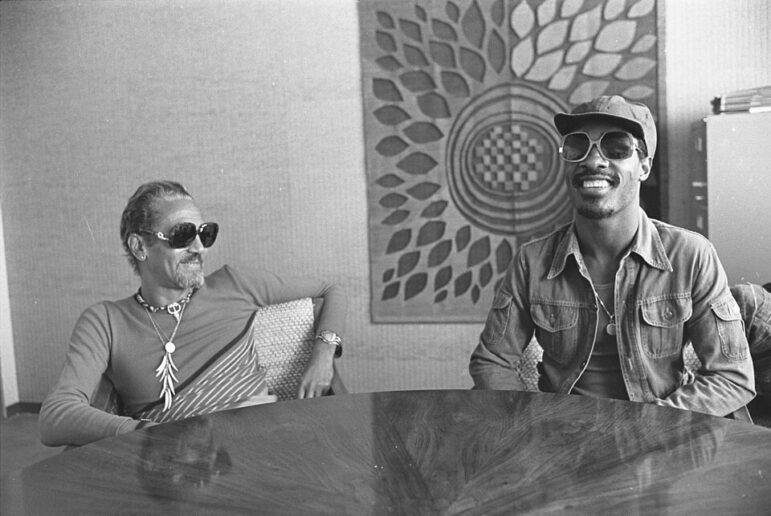
The cacophony of discord in the contemporary national psyche—marked by political tribalism, economic anxiety, and cultural alienation—has a clear playlist. Whether looking at the sharp social critique in Gil Scott-Heron’s "Bicentennial Blues," the environmental and spiritual warnings in Marvin Gaye’s catalog, or the communal joy found in disco and soul, 1970s artists proved that entertainment and ethical awareness can coexist.
The implicit warning for modern America is clear: when a society prioritizes superficial spectacle and corporate-sanctioned safety over honest dialogue, it risks sleepwalking into cultural erosion. True progress, as echoed through the decades by artists from Stevie Wonder to Gil Scott-Heron, requires internal transformation before external change can manifest.
We are the authors of the playlists that score our daily lives. As the nation steps past its 250-year mark, the challenge is to listen beneath the noise, recover our capacity for civility and deep listening, and ensure that our cultural legacy remains a testament to honesty, resilience, and hope.