








August 19, 2026
By The Wild Hunt
Introduction: The Whispers of Ancient Rituals
Across the European continent, from the sun-drenched ruins of Crete to the dense woodlands of England and the muddy wetlands of the Czech Republic, recent archaeological excavations are offering profound new insights into how ancient communities interacted with the divine, the natural world, and the supernatural. Far from being isolated anomalies, a series of recent discoveries highlights the sheer diversity and complexity of prehistoric and classical ritual behavior.
Whether it is hundreds of mice deliberately deposited at a revered Greek sanctuary, a cache of intentionally destroyed bronze implements sunk into a Central European bog, or a hidden stone circle discovered around a sacred spring in a British forest, these findings are reshaping our understanding of ancient sacred landscapes. In this installment of Hounds Archaeology, we examine the physical evidence of these ancient rites and the shifting religious paradigms they reveal.
Main Facts: Three Discoveries Redefining Ancient Cults
Recent archaeological work has brought to light three distinct sites that challenge existing interpretations of ancient ritual and sacred geography:
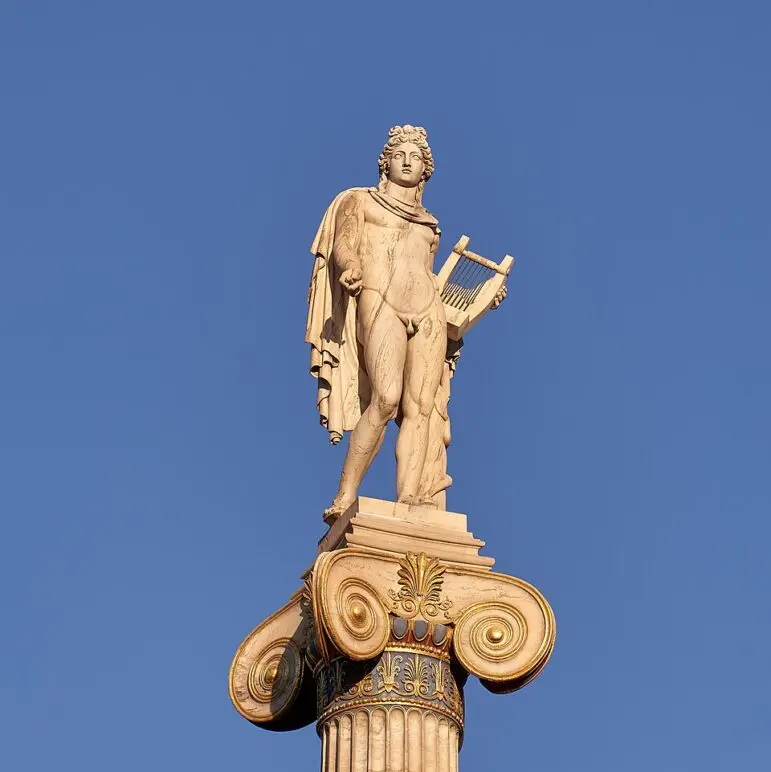
- The Sanctuary of Apollo in Gortyna, Crete: Italian and University of Padua researchers analyzing seventh-century B.C. votive sediments discovered the remains of more than 450 house mice (Mus musculus). This dense, unnatural concentration suggests deliberate ritual deposition, pointing to an early local cult dedicated to Apollo Smintheus—the mouse-god associated with agriculture and pestilence—long before the site transformed into a center for Apollo Pythios.
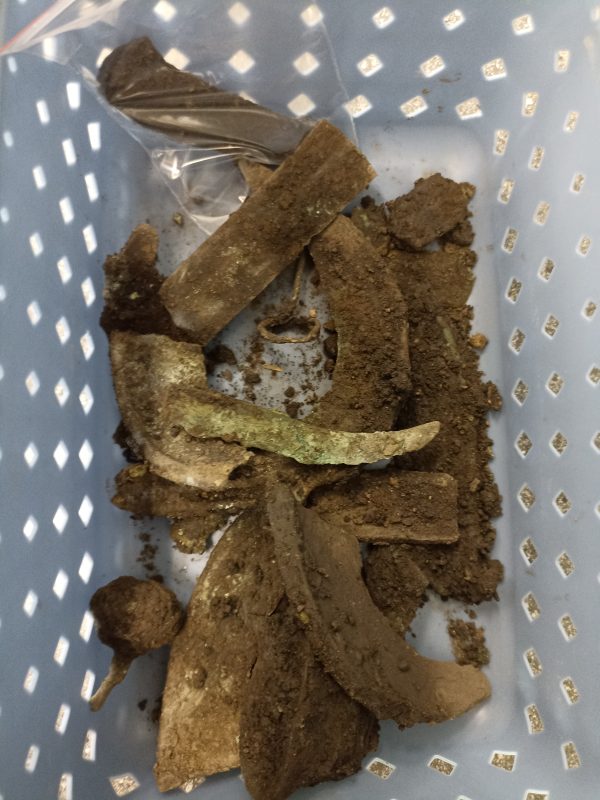
- The Kojetín Bronze Age Hoard, Czech Republic: Excavators from the Archaeological Centre Olomouc discovered a Late Bronze Age "fragment hoard" in a wetland near Kojetín. Consisting of nine bent sickles, a broken sword blade, ornament fragments, and metal ingots, the collection shows signs of intentional pre-deposition damage, reinforcing the theory of votive offerings made to watery environments by the Urnfield culture.
- The Farley Moor Stone Circle, Derbyshire, England: Prompted by 24-year-old archaeology student George Bird, excavations supported by Forestry England and the Time Team production crew revealed that an isolated six-foot standing stone in Farley Wood was actually part of an 82-by-75-foot oval stone circle dating back roughly 3,700 years. Crucially, the circle was constructed over a pre-existing ceremonial platform built directly above a natural spring.
Chronology: A Timeline of Sacred Landscapes and Excavation
To fully appreciate the scope of these findings, it is helpful to trace both the ancient timelines of the sites and the modern chronology of their rediscovery.
1. The Deep Past: Prehistoric and Classical Chronology
- c. 1700 B.C. (Middle-Late Bronze Age, Derbyshire): Communities in what is now England construct a ceremonial platform over a natural spring at Farley Moor, initiating centuries of ritual water-focused activity before erecting a stone circle around it.
- c. 1200–800 B.C. (Late Bronze Age, Moravia): Urnfield culture communities across Central Europe routinely deposit broken and ritualistically damaged metal goods—such as the Kojetín hoard—into wetlands, rivers, and bogs as votive offerings to deities or unseen powers.
- c. 700 B.C. (Archaic Period, Crete): At Gortyna, worshippers deposit hundreds of house mice in a sacred context, honoring an agrarian and chthonic manifestation of Apollo (Apollo Smintheus). Over subsequent centuries, as Gortyna grows into a major urban hub, the cult shifts toward the more pan-Hellenic, prophetic persona of Apollo Pythios.
2. Modern Discovery and Excavation Timeline
- Late May 2026 (Kojetín): Archaeologists from the Archaeological Centre Olomouc, monitoring modernization efforts for the Brno–Přerov railway, uncover bronze artifacts in a recently flooded wetland area using metal detectors.
- Recent Field Seasons (Derbyshire): Archaeology student George Bird documents anomalous stones in Farley Wood, bringing them to the attention of Forestry England. Subsequent excavations alongside Time Team specialists confirm the existence of the Bronze Age stone circle.
- August 2026 (Gortyna): The Italian School of Archaeology at Athens and the University of Padua publish analyses of seventh-century B.C. sediments, revealing the massive concentration of mouse remains that shifts the historical narrative of the Cretan sanctuary.
Supporting Data: Material Culture and Environmental Contexts
The integrity of archaeological interpretation relies heavily on the meticulous collection of supporting data, environmental contexts, and material science. Each of the three sites presents compelling physical evidence that elevates the finds from mere curiosities to vital historical documents.
The Gortyna Mice: Quantifying the Chthonic
At the sanctuary in Gortyna, researchers did not merely find a few stray bones that could be attributed to natural mortality or barn owl pellets. The meticulous sorting of sediments from a votive deposit within a seventh-century B.C. structure yielded over 450 individual house mice (Mus musculus). The uniformity of the deposit, coupled with its archaeological surrounding inside a recognized sacred precinct, points unequivocally to human agency. In the ancient Mediterranean, animals closely tied to the earth, crops, and disease often occupied specialized niches in religious rites—serving either as scapegoats, protective talismans, or offerings to chthonic deities who held sway over the harvest and plagues.
The Kojetín Hoard: Anatomy of a Fragment Deposit
The metal assemblage recovered near Kojetín comprises sophisticated metallurgical products of the Urnfield culture:

- Nine bronze sickles: Eight of which were purposefully bent out of shape prior to burial.
- Weapons and Ornaments: A fragment of a sword blade broken by a heavy, deliberate blow, alongside ornament fragments.
- Raw Materials: Three bronze ingots and two unfinished objects.
The deliberate mutilation of functional, high-value bronze items indicates a ritual "killing" of the objects. By breaking or bending them, the givers rendered the metal unusable for mundane purposes, effectively dedicating its economic and symbolic value exclusively to the spirit world or water deities.
Farley Moor: Monumental Geometry and Hydrology
The architectural data from Farley Moor reveals a sophisticated understanding of sacred topography:
- Monument Dimensions: An oval arrangement measuring approximately 82 by 75 feet.
- Stone Count: At least six standing stones, transforming a solitary monolith into a cohesive stone circle.
- Stratigraphy: Excavations demonstrated that a built ceremonial platform predated the erection of the standing stones, proving that the site’s association with the natural spring spanned generations before the monument took its final megalithic form.
Official Responses and Expert Commentary
The significance of these discoveries has drawn commentary from leading heritage organizations and academic figures, highlighting the collaborative nature of modern archaeology—where students, local volunteers, and institutional researchers work hand-in-hand.
Regarding the Farley Moor discovery, Lawrence Shaw, Forestry England’s lead historic environment advisor, emphasized that the find completely alters our perception of local prehistoric footprints. He noted that the site demonstrates how complex and widespread ritual landscapes were, extending far beyond major tourist landmarks.

Dr. Derek Pitman, Associate Professor of Archaeology and Anthropology at Bournemouth University, expressed his enthusiasm for the project:
"It’s a dream come true to get to work on such a significant prehistoric monument. The scale of activity that likely existed in that landscape highlights the impact of Bronze Age ritual life far beyond headline sites like Stonehenge. This project also showcases the value of investigating sites that have been hidden in the nation’s forests for the last few decades and implies a wealth of archaeology still waiting to be explored."
Meanwhile, regional heritage centers—such as the Archaeological Centre Olomouc and the Italian School of Archaeology at Athens—have emphasized the importance of rescue archaeology and interdisciplinary scientific analysis (ranging from radiocarbon dating to zooarchaeology) in unlocking the silent stories held within soil, bone, and bronze.
Implications: Rewriting the Religious Evolution of Antiquity
These disparate discoveries, when viewed collectively, carry profound implications for how we understand ancient belief systems across Europe.

- Fluidity of Deities: The revelation at Gortyna demonstrates that major deities like Apollo were not monolithic entities imported wholesale into a region. Instead, local cults adapted pre-existing, localized functions—such as agrarian protection from rodents (Smintheus)—before aligning with broader pan-Hellenic identities (Pythios). Religion in antiquity was dynamic, responsive to local ecological pressures, and capable of shifting alongside urban and social development.
- The Sacredness of Place and Water: Both the Kojetín wetland deposit and the Farley Moor spring-side platform underscore the ancient reverence for transitional landscapes. Wetlands, bogs, springs, and brooks were viewed as liminal zones—portals or boundary spaces where human petitioners could directly communicate with chthonic and aquatic powers. Depositing valuable or ritually killed goods in these locations was an investment in cosmic order, ensuring agricultural fertility, community health, and appeasement of the gods.
- Decentralizing Prehistoric Studies: As discoveries like Farley Moor prove, monumental architecture and ritual intensity were not restricted to elite administrative centers or famous sites like Stonehenge. The British woodlands and Central European river valleys are teeming with hidden ceremonial spaces built by ordinary communities whose spiritual lives were rich, layered, and deeply connected to their immediate natural surroundings.
As conservation and further analysis continue on these artifacts and sites, archaeologists anticipate even greater clarity regarding the psychological and spiritual world of our ancestors—proving that beneath every forest canopy, wetland, and classical ruin lies a deeply human story waiting to be told.