








BEIJING/WASHINGTON — In a direct rebuff to the United States, the Chinese government formally rejected demands on Monday, August 24, to join an aggressive and expanded American economic campaign targeting Iran. The diplomatic showdown marks a significant escalation in the six-month-old geopolitical and financial conflict that has fundamentally disrupted global energy markets and accelerated a structural decoupling between Western and Eastern financial systems.
The friction intensified after U.S. Treasury Secretary Scott Bessent unveiled what the administration has branded "Operation Economic Outcast." This sweeping new phase of U.S. economic warfare targets nearly 60 entities, individuals, and vessels across Iran’s core strategic sectors, including oil, nuclear infrastructure, missile development, and cyber networks. The White House has framed the measures as a necessary crackdown on the "enablers" who purchase Iranian petroleum and facilitate illicit financial flows, keeping Tehran’s economy afloat.
However, Beijing has pushed back hard, setting the stage for a prolonged economic and diplomatic standoff that threatens to redraw the lines of global trade.
Main Facts
The core of the current crisis centers on a high-stakes collision between Washington’s "maximum pressure" doctrine and Beijing’s resolute defense of its bilateral trade and energy security.
- The U.S. Escalation: Under the banner of "Operation Economic Outcast," the U.S. Treasury Department has unleashed what Secretary Bessent described as "the single greatest financial offensive ever" directed against a sovereign nation. The sanctions sweep up nearly 60 targets globally, explicitly aiming to choke off Iran’s remaining lifelines.
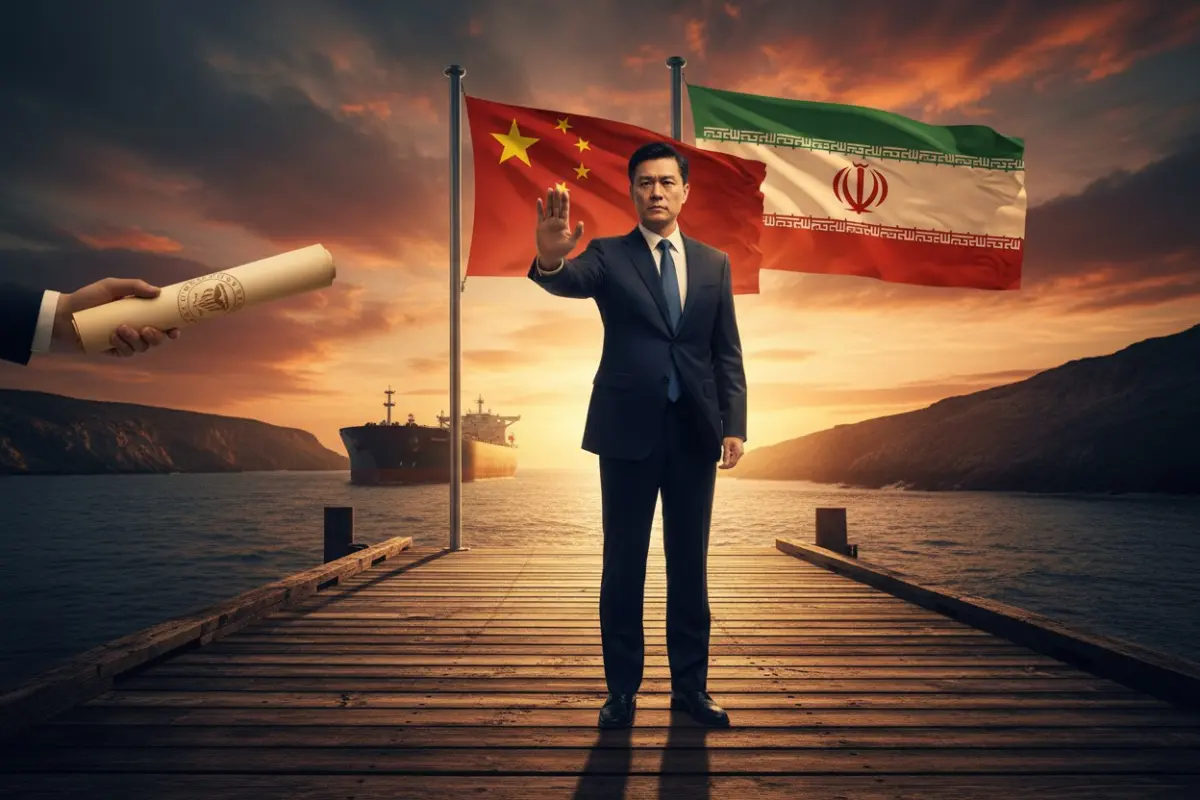
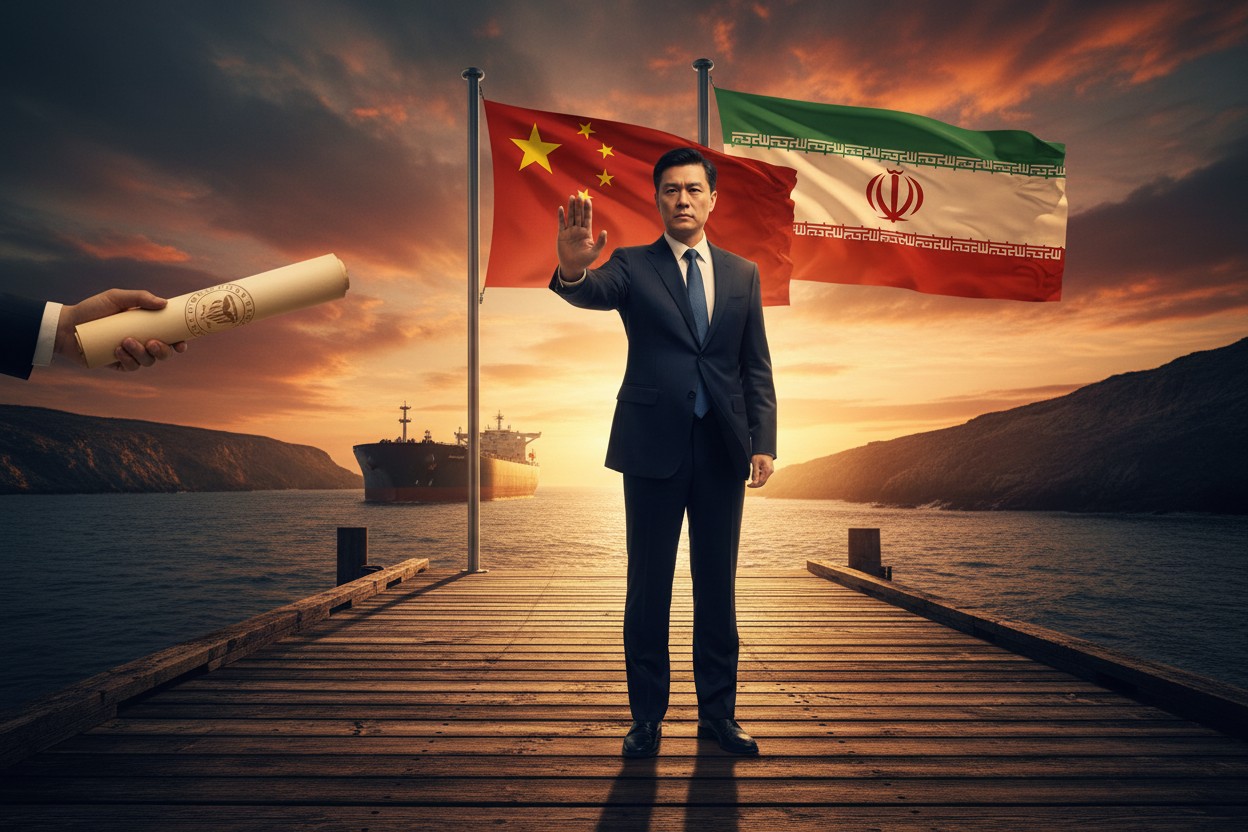
- The Chinese Rejection: Speaking in Beijing on Monday, August 24, Chinese Ministry of Foreign Affairs (MFA) Spokesman Lin Jian formally turned down U.S. demands for compliance. Lin warned that Washington’s economic warfare serves no one’s interests and vowed that Beijing would take all necessary measures to protect its legitimate rights and economic interests.
- The Energy Crossroads: The United States has trained its sights heavily on third-party nations trading with Iran, noting explicitly that China—which relies on the Gulf region for roughly 50% of its energy imports—runs a severe risk of secondary sanctions. Washington has urged Beijing to "get with the program," an appeal that has been met with categorical dismissal from the Chinese Ministry of Commerce.
- The Financial Workaround: Driven out of the Western-dominated SWIFT network by years of tightening restrictions, Iran’s oil trade has entirely decoupled from the U.S. dollar. Transactions are now overwhelmingly settled in Chinese yuan via China’s Cross-Border Interbank Payment System (CIPS), effectively shielding Tehran from direct American financial oversight.
Chronology of the Conflict
To understand the gravity of the August 24 clash, it is necessary to examine the rapid sequence of military and economic escalations that have defined the U.S.-Iran-China nexus over the past half-year:
- Late February 2026: The United States launches targeted military operations inside Iran on February 28, plunging the region into a state of active kinetic conflict and effectively shutting down the strategic Strait of Hormuz.
- March–July 2026: In the wake of the military strikes, global energy corridors freeze. Iran asserts regulatory control over the Strait of Hormuz, announcing counter-sanctions on foreign vessels violating its maritime policies. Meanwhile, the U.S. Treasury incrementally increases pressure on Chinese entities engaged in energy cooperation with Tehran, prompting steady pushback from Beijing.
- Mid-August 2026: Iranian Foreign Minister Abbas Araghchi publicly dismisses the U.S. strategy as an "Economic D-Day" that is destined to end in Washington’s defeat. Strategic military and economic ties between Tehran and Beijing deepen, highlighted by intelligence reports pointing to bilateral defense agreements, including Chinese-supplied shoulder-fired missile systems.
- August 24, 2026: U.S. Treasury Secretary Scott Bessent officially rolls out "Operation Economic Outcast" during a high-profile media briefing. Hours later, Chinese MFA Spokesman Lin Jian issues a formal rejection of the campaign, warning against the destabilizing ripple effects of U.S. unilateralism on the world economy.
Supporting Data and Economic Impact
The macroeconomic implications of the standoff extend far beyond bilateral diplomacy, striking at the heart of global commerce and energy security.
- The Strait of Hormuz Chokepoint: The maritime passage remains effectively closed or severely restricted in the wake of the late-February U.S. military operations. The Strait is responsible for roughly 20% of global petroleum consumption and one-third of the world’s liquefied natural gas (LNG) exports, making the ongoing blockade a constant upward pressure on global energy prices.
- China’s Energy Buffer: To mitigate the immediate supply shocks, China has leaned heavily on its vast strategic petroleum reserves and diversified its crude imports. Nonetheless, the vulnerability of losing half its Gulf energy supplies remains a core strategic anxiety for Beijing, even as it defies U.S. pressure.
- De-Dollarization Acceleration: The imposition of U.S. secondary sanctions has catalyzed an alternative financial architecture. By utilizing China’s CIPS network and settling energy transactions in yuan, Beijing and Tehran have successfully engineered a functional bypass around the U.S. dollar-denominated financial system, blunting the long-term efficacy of Washington’s financial offensive.
Official Responses
The rhetoric emanating from the capitals involved highlights an ideological and strategic chasm that shows no sign of narrowing.
Washington: The Enforcer’s Perspective
U.S. officials maintain that aggressive financial isolation is the only way to compel Tehran to alter its geopolitical and military posture. During his briefing with CNBC, Secretary Bessent pointed directly at China’s heavy reliance on Middle Eastern energy, suggesting that Beijing’s cooperation with Washington’s sanctions regime would ultimately serve its own long-term stability.
"Keep in mind, the Chinese get 50% of their energy from the Gulf," Bessent argued. "So, it would do them a big service to get with the program." The Treasury Department insists that nations facilitating Iranian trade are acting as enablers of regional instability and must face the full weight of secondary penalties.
Beijing: Defending Sovereignty and Multilateralism
China’s response has been anchored in its steadfast opposition to unilateral sanctions authorized outside the framework of the United Nations.
MFA Spokesman Lin Jian emphasized rationality and restraint during his Monday briefing, cautioning that Washington’s pressure tactics only serve to exacerbate global volatility. "U.S. pressure policies and sanctions lead only to escalation and serve no one’s interests," Lin stated. He reiterated that Beijing is closely monitoring the situation and stands ready to take "necessary measures" to defend its legitimate rights and commercial partnerships.
Tehran: Defiance and Strategic Alignment
Iranian leadership has adopted a posture of defiant resilience. Foreign Minister Abbas Araghchi characterized the latest U.S. economic onslaught as an overextended "Economic D-Day" that will ultimately backfire on Washington. Bolstered by its deepening strategic, financial, and military alignment with China and Russia, Tehran has signaled that it will weather the financial storm by relying on non-Western economic corridors.
Broader Implications
The rejection by Beijing on August 24 represents a watershed moment that transcends the immediate U.S.-Iran dispute. It illustrates the hard limits of American economic statecraft in an increasingly multipolar world.
When unilateral sanctions are met with the coordinated resistance of economic superpowers like China, the traditional leverage held by Washington through the global financial system begins to erode. Rather than isolating Tehran entirely, the maximum pressure campaign has instead accelerated the consolidation of an alternative, non-dollar trading bloc.
As the conflict enters its seventh month, the standoff in the Strait of Hormuz and the parallel war of financial attrition demonstrate that global energy markets will continue to bear the cost of this geopolitical realignment. With neither Washington nor Beijing showing an inclination to back down, the international community faces a protracted era of fragmented trade, heightened energy volatility, and a deeply entrenched economic Cold War.