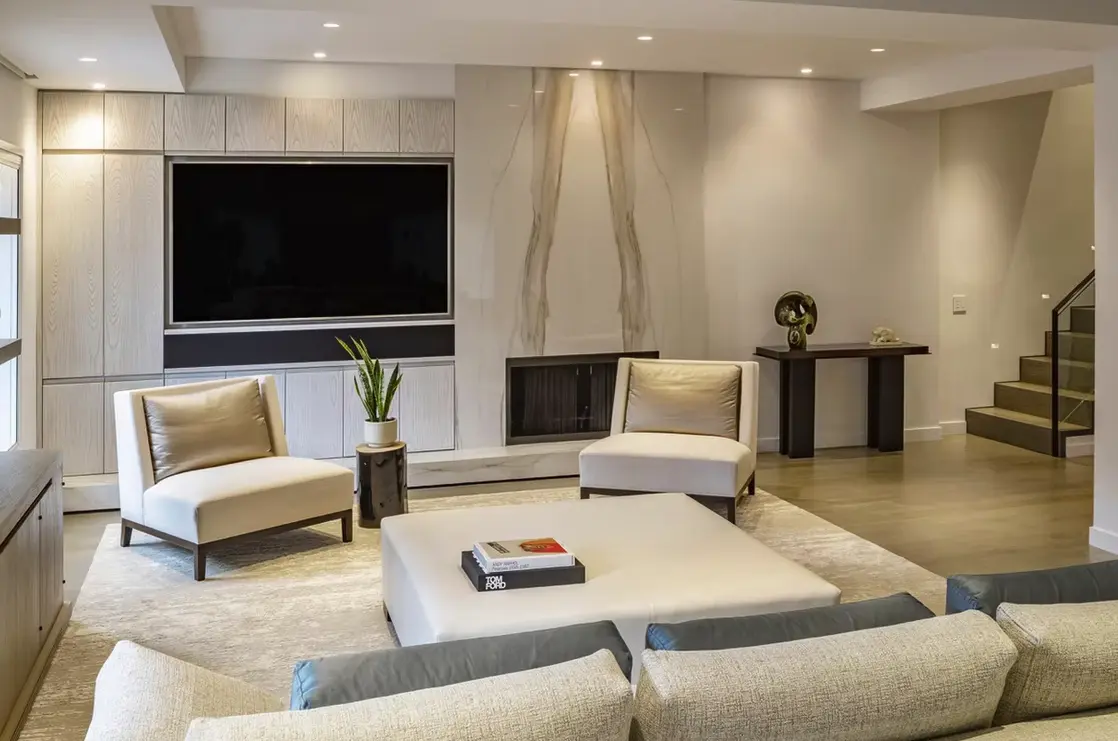
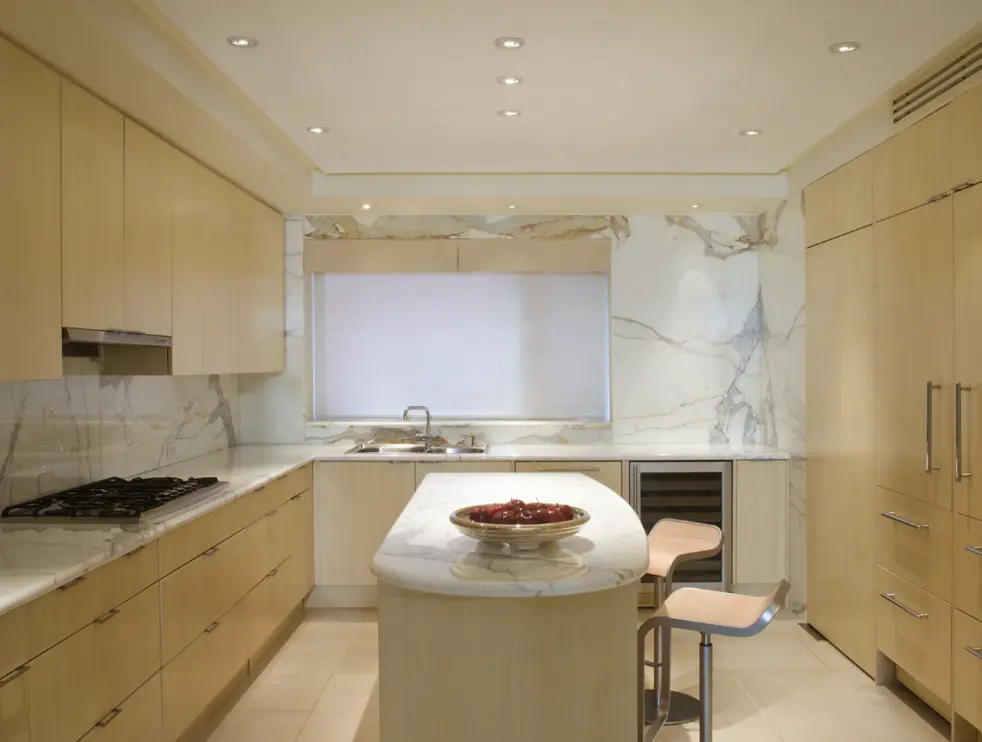
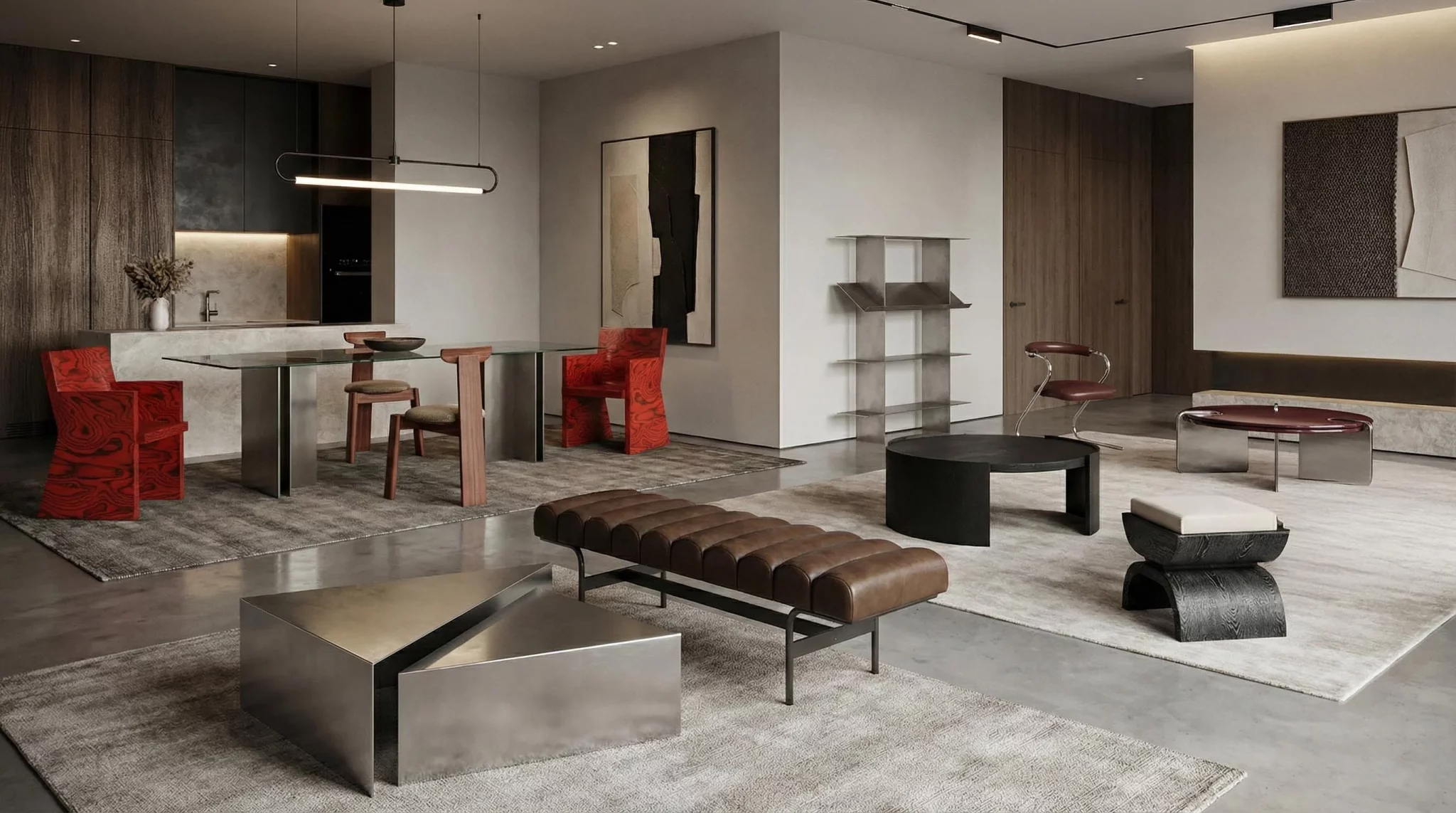
NEW YORK — In an era dominated by maximalist trends, digital noise, and fleeting design fads, Manhattan-based interior architect Nitzan Tagansky has carved out a quiet, enduring niche. Known for spaces that are dramatically simple yet deeply inviting, Tagansky’s work represents a masterclass in warm-modern design. His interiors are never cold or austere; instead, they possess a deliberate, confident restraint that immediately centers the mind, shifts the atmosphere, and—above all—feels authentically lived-in.
As part of the Roomhints Designer Spotlight series, this profile explores the philosophy, portfolio, and profound creative ethos of a designer whose work spans from sprawling New York lofts to international hospitality concepts.
Main Facts: The Blueprint of Nitzan Tagansky
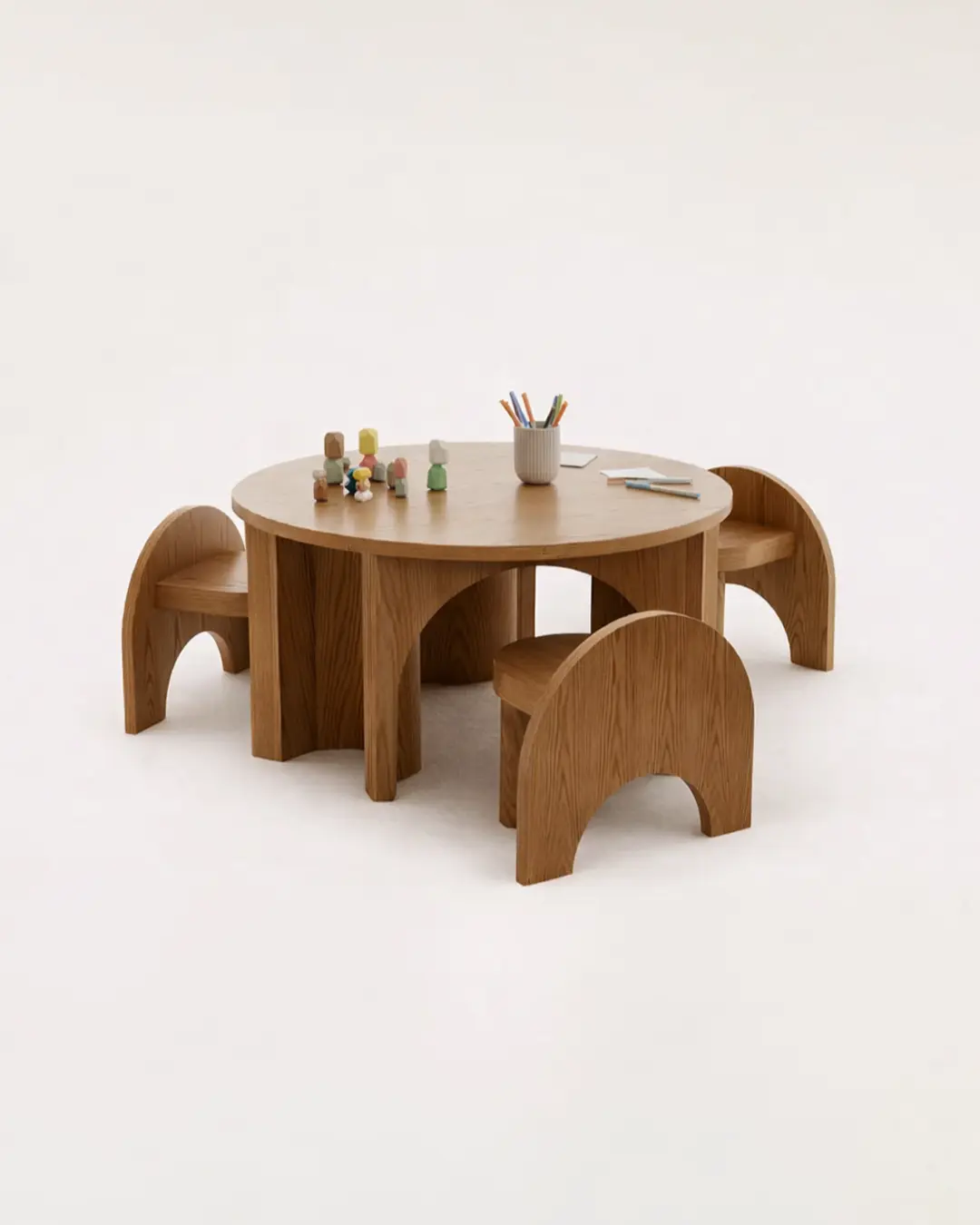
Operating out of New York City, Tagansky has built a multifaceted career that encompasses high-end residential interior architecture, bespoke furniture design, and international hospitality projects. Alongside his partner, Dale, he developed Nitzan Home, a curated furniture collection whose pieces have been specified for luxury hotels and discerning private residences across the globe.
Tagansky’s expansive portfolio features an impressive geographical and architectural range. From classic New York apartments, industrial lofts, and historic townhouses to sun-drenched summer houses in the Hamptons, a sleek London pied-à-terre, and innovative design concepts for a luxury hotel in Jerusalem, his aesthetic remains remarkably consistent. Regardless of the scale or location, his spaces share a common DNA: an uncompromising commitment to human comfort, emotional resonance, and architectural clarity.
Chronology and Evolution: From Global Projects to Trusted Partnerships
To understand Tagansky’s rise in the competitive world of high-end interior architecture, one must examine the trajectory of his practice, which has grown organically through word-of-mouth, high-profile international commissions, and a steadfast dedication to his craft.
Foundational Years: Establishing his base in Manhattan, Tagansky initially focused on local residential transformations, mastering the intricate spatial challenges inherent to New York apartments and historic townhouses.
Expansion into Hospitality & Global Residential: As his reputation for warm minimalism grew, his project map expanded internationally. Commissions began to roll in for London pieds-à-terre and conceptual hospitality spaces, including visionary design frameworks for a major hotel project in Jerusalem.
The Launch of Nitzan Home: Recognizing a gap in the market for furniture that aligned with his architectural philosophy, Tagansky partnered with Dale to launch Nitzan Home, bridging the divide between custom architectural interiors and accessible, high-craftsmanship furnishings.
The Milestone Tribeca Commission: Cementing his status as a designer capable of handling high-stakes, high-trust environments, Tagansky successfully completed a massive 5,000-square-foot Tribeca loft entirely sight-unseen for an international client relocating from Australia—a project that remains a defining moment in his career.
Supporting Data & Methodology: The Four Pillars of Good Design
When asked about the foundational elements of his work, Tagansky avoids complex, jargon-heavy manifestos. Instead, he distills his entire creative methodology into four precise concepts:
"Scale, proportion, a certain timelessness in design, and quality craftsmanship are the ingredients of good design."
These four words function as a rigorous diagnostic tool for every chair, wall treatment, and spatial layout that leaves his studio:
Scale: Does the object genuinely belong in the room, or is it fighting its environment?
Proportion: Does every element relate harmoniously to its surroundings?
Timelessness: Will this design choice still hold integrity, relevance, and beauty twenty years from now?
Craftsmanship: Is the item crafted to a standard that justifies its physical presence in a human home?
The Anatomy of Transformation: The Power of the Lamp
When pressed on what single element possesses the power to fundamentally alter a room, Tagansky’s answer defies conventional luxury instincts. He does not point to an elaborate chandelier, a sculptural staircase, or a museum-grade art piece.
Instead, he points to a good lamp.
According to Tagansky, the right lamp placed thoughtfully within a space alters the quality of light, modulates the room’s perceived scale, and injects a layer of emotional warmth that overhead architectural fixtures simply cannot replicate. It is a nuanced detail that reveals an intimate understanding of sensory psychology—how rooms actually feel to inhabit after dark.
Official Responses & Designer Insights: The Value of Creative Freedom
Perhaps Tagansky’s most strongly held conviction—and the one he imparts most passionately to prospective clients—revolves around the delicate dynamic between designer and homeowner.
"The more freedom you give the designer you hired to do their thing, the more successful the outcome of the project."
Drawing from years of practical experience, Tagansky notes that this principle is not merely a matter of personal preference, but an empirical observation. Constraint invariably breeds caution, leading to safe, compromised spaces. Conversely, true creative freedom allows a project to breathe, resulting in rooms that feel cohesive, daring, and deeply personal.
Inspiration in the Age of Visual Overload
In an era where designers are constantly bombarded by digital mood boards, social media feeds, and endless streams of imagery, Tagansky maintains a disciplined perspective on inspiration:
"Inspiration can really come from anywhere, and we are continually bombarded with images on a daily basis—of architecture, art, design, fashion, photography, nature. It’s when something is done in a particularly simple but clever or striking way that I find inspiration in."
Crucially, Tagansky emphasizes that "simple" is never synonymous with "easy." True simplicity requires rigorous editing—the ruthless stripping away of all unnecessary elements until only what is essential and undeniably right remains.
Implications: The Tribeca Project and the Human Core of Design
Ultimately, interior design is not measured solely by square footage, material budgets, or publication features. For Tagansky, the true metric of success is emotional resonance.
No project illustrates this better than his commission for a family of five—a couple with three small children preparing to relocate from Australia to the United States. Entrusted with designing a 5,000-square-foot loft in Tribeca, Tagansky and his team worked for six months without the clients ever stepping foot inside the property.
When the family finally arrived after their trans-global move, the emotional impact was immediate and profound. As Tagansky recalls:
"Because of the generous creative freedom that they gave us, we worked very hard to create a beautiful and special home for them. When the family finally arrived after six months of work, the couple was so taken with the outcome that the wife could not stop crying from joy. We will never forget this project, and this lovely family, and have remained friends to this day."
This defining moment encapsulates the ultimate implication of Tagansky’s work: when exceptional talent meets uncompromising trust, architecture transcends physical shelter to become a life-changing sanctuary.
Discover More
Nitzan Tagansky Portfolio: Explore residential and international projects at nitzandesign.com.
Nitzan Home Collection: Discover bespoke furniture and artisanal pieces at nitzanhome.com.
Roomhints Series: Read more conversations with the world’s leading interior architects as part of the Roomhints Designer Spotlight series.