








Main Facts
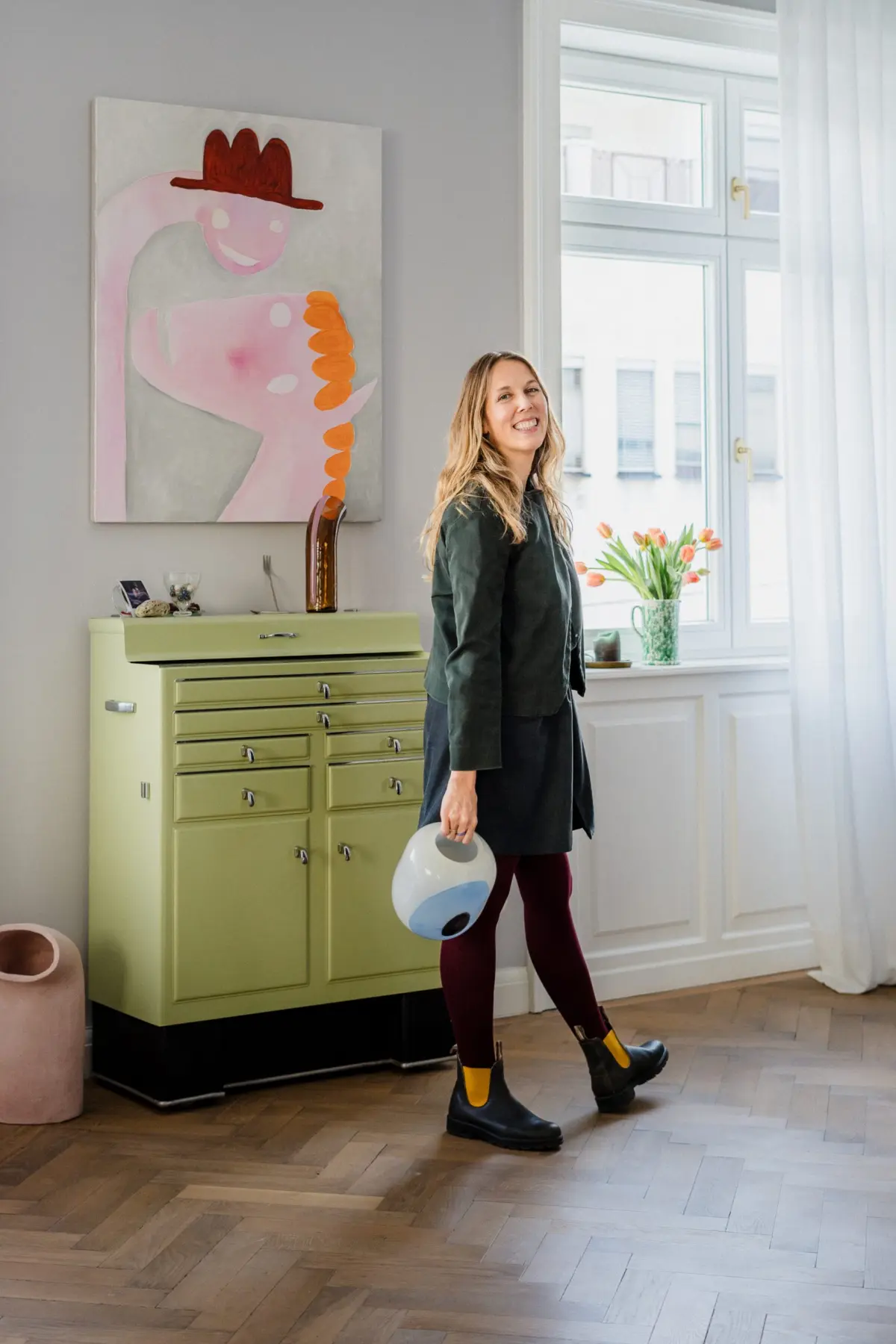
In the quiet intersection of traditional craftsmanship and unbridled creative intuition lies Ursula Futura, a Vienna-based design studio that is rapidly changing how we think about decorative glass and lighting. Founded by designer Kathrin Schaden, the studio operates not merely as a commercial enterprise, but as a deliberate alter ego—a space born from the rejection of self-censorship, perfectionism, and aesthetic restraint.
At the core of Ursula Futura’s output is a commitment to mouth-blown, hand-shaped glass objects that challenge the cold precision of mass-produced interior decor. Working primarily with master blowers in Bohemia, Schaden breathes literal and figurative life into a medium famously described as "a liquid pretending to be a solid."
The studio’s signature catalog features evocative creations such as NESSIE, PHANTOM, and the standout PULSAR series—a family of sculptural lamps defined by softly stepped cones, opaque colored glass, and an intentional, tactile imperfection. Rather than hiding the natural anomalies of the craft, such as interior air bubbles and subtle textural variations, Ursula Futura embraces them as proof of life, ensuring that no two pieces across the globe are ever truly identical.

Chronology: From Creative Suppression to Unapologetic Expression
To understand the distinct emotional resonance of Ursula Futura, one must trace the trajectory of its creator, Kathrin Schaden.
- The Formative Years: For much of her early career in design, Schaden found herself navigating an industry that frequently rewarded minimalist restraint, uniformity, and safe, commercial styling. Constantly told that her ideas, color choices, and emotional impulses were "too much," she spent years editing her natural creative instincts to fit conventional molds.
- The Birth of the Alter Ego: Recognizing that this creative suppression was stifling her artistic voice, Schaden established Ursula Futura. Named to evoke a sense of uncompromised future vision, the studio became a sanctuary for the ideas she "couldn’t stop thinking about." It was built on a simple premise: if a design sparks an unexplainable, emotive reaction—much like a sudden rainbow catching a room’s window—it deserves to exist.
- Mastering the Furnace: Moving away from modern industrial casting techniques, Schaden turned to heritage glassmaking regions. She partnered with traditional artisans in Bohemia and established her operational base in Vienna. Here, the laborious, ancient art of mouth-blowing glass became the exclusive medium for translating transient gestures into permanent forms.
- The Evolution of the Pulsar Line: Transitioning from standalone sculptural objects to functional art, the studio conceptualized the Pulsar lamp series. By translating the dynamic, continuous movement of a wave into stepped glass cones, Schaden successfully merged kinetic fluidity with architectural lighting.
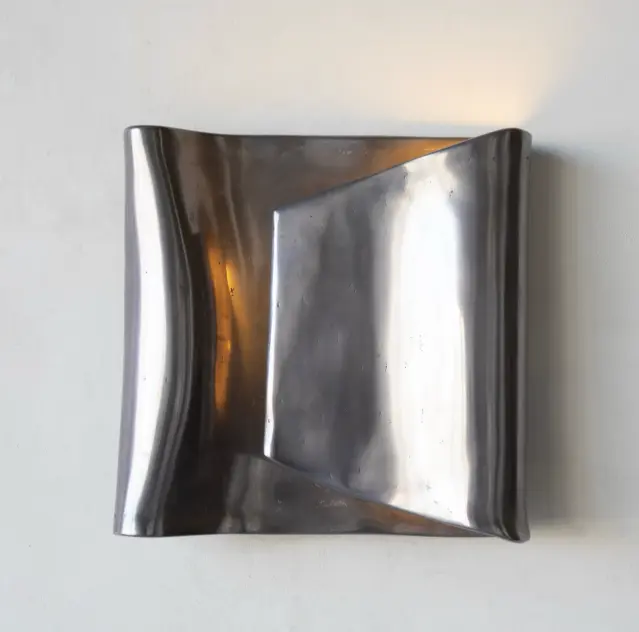
- The Present and Future Horizon: Today, Ursula Futura has captured the attention of international interior designers and collectors alike. With the table lamp firmly established as a critical and commercial darling, the studio is actively developing expanded iterations, including upcoming pendant and wall lamp collections slated to debut through their digital home at
ursulafutura.com.
Supporting Data & Craftsmanship Metrics
The production of an Ursula Futura piece is an exercise in physics, timing, and raw human endurance. Understanding the mechanics behind the studio’s work highlights why these objects occupy a tier entirely separate from mainstream home decor:
- The Medium: Glass is fundamentally an amorphous solid—a supercooled liquid. When heated within traditional Bohemian furnaces to temperatures exceeding 1,000°C (1,830°F), the material temporarily "remembers" its liquid state, allowing master blowers to manipulate it using traditional pipes and hand tools.
- Production Variables:
- Temperature Control: A variation of just a few degrees during the blowing or cooling process can alter the density and refraction of the colored glass.
- The Human Element: Because every piece is mouth-blown without heavy industrial molds dictating absolute uniformity, dimensions and wall thicknesses feature organic micro-variations.
- Inclusion Rates: Unlike automated manufacturing facilities that discard glass containing trapped atmospheric micro-bubbles, Ursula Futura deliberately preserves these pockets. They serve as physical records of the material "arguing back" against the blower’s breath.
- Design Geometry: The Pulsar lamp, for instance, relies on a multi-tiered, stepped cone architecture. This specific geometry is mathematically calculated to refract light uniquely depending on whether the lamp is powered on or off, transforming the object’s color palette throughout the day as natural sunlight shifts across a room.
Official Responses and Creative Philosophy
Kathrin Schaden’s public statements and design notes offer deep insight into the ethos guiding Ursula Futura. Rather than focusing purely on functional utility, her work is rooted in phenomenology—how spaces make inhabitants feel.

In discussing her ongoing fascination with kinetic forms, Schaden notes:
"I keep coming back to the wave because it never really stops moving, even when it’s frozen in glass. The repetition in the form feels meditative to me. Like breathing, or tides."
Addressing the emotional genesis of the brand, design critics and curators have frequently noted how Ursula Futura represents a broader cultural pushback against hyper-sanitized, algorithmically generated interior aesthetics. In an era where online marketplaces are flooded with mass-produced acrylic and injection-molded plastic decor designed for visual sameness, Schaden’s refusal to apologize for bold color choices and emotional maximalism has resonated deeply.

When asked about the philosophy of the studio, representatives emphasize that the objects are intentionally designed to evoke a visceral, pre-rational response:
"Light hits glass and the room shifts and you stop and you stare and you feel something you can’t explain. And you don’t want to. That’s where Ursula begins. That’s why she makes anything at all."
Implications for Modern Interior Design and Craft
The rise of Ursula Futura signals several notable shifts within contemporary interior architecture, artisanal production, and consumer psychology:
- The Revival of Imperfection: For decades, high-end design was synonymous with laser-cut precision and flawless, machine-finished surfaces. Studios like Ursula Futura are proving that modern consumers increasingly crave "wabi-sabi"—an appreciation for authenticity, tactile human traces, and unique flaws that tell a story.
- Lighting as Kinetic Sculpture: The Pulsar lamp challenges the traditional role of a luminaire. Instead of acting merely as a functional utility designed to illuminate a dark corner, the lamp serves as a dynamic sculpture. Its appearance is entirely transformed by ambient daylight, changing angles, and internal illumination, effectively giving the object a dual identity.
- The Rise of Emotional Maximalism: The commercial success of unapologetically bold studios indicates that interior design is moving past the austere, neutral-toned minimalism that dominated the 2010s. Homeowners and interior stylists are seeking out conversation pieces that anchor a room with distinct personality, emotional gravity, and saturated color.
- Preservation of Endangered Craft Heritage: By maintaining active partnerships with traditional Bohemian glassblowers and Viennese artisans, Ursula Futura actively contributes to the preservation of specialized, centuries-old craft techniques that are otherwise endangered by automated industrial scaling. As the studio expands its footprint into wall sconces and pendant fixtures, it proves that heritage techniques can thrive within cutting-edge contemporary design spaces.